| NATURE | Human; heir to a witch’s gift |
|---|---|
| ROLE | Central link between the worlds |
| MAIN POWER | Freedom of choice, adaptability, the ability to tame and banish |
| MAIN WEAKNESS | Curiosity, overconfidence, the risk of losing one’s sense of self |
Chelsea enters the estate for the money, but by the end of her first night, she has become a focal point for spirits, worlds, and the desires of others.
Full Name: Chelsea; last name undisclosed
Nature: Human, hereditary witch
Status: Central protagonist, interworld traveler, and heir to Agnet
Family: Melissa, her sister; Agnet, her aunt; Maria, her distant ancestor
Main Protector: Jack, the Candle Demon
Main Enemies: The Jester, the Puppet Master, Henri Sanson, Duke Weber, and the forces of the Moonlit World
Main Property: Agnet’s Estate; later, the restored manor and a hotel purchased with Melissa
Special Role: A human conduit whose presence awakens spirits, portals, and entire worlds
Danger Level: Outwardly ordinary; in reality, one of the most unpredictable forces in the universe
Key Trait: Able to enter another’s imagination, adopt some of its rules, and still retain the right to choose her own ending
General Description
Chelsea is the central heroine of the entire story and the true focal point of the world.
She is not an ancient goddess.
She is not a witch trained from childhood.
She is not a chosen warrior.
She is not a flawless savior.
At the beginning of the story, Chelsea is a modern young adult who agrees to spend the night at a strange estate mainly because she’s been promised a house and about ten million dollars.
This is very important.
She enters the story not as the heroine of a prophecy, ready to sacrifice herself for the sake of humanity.
She enters it out of curiosity, practicality, and a desire to claim a large inheritance.
But beyond the gates lies a world where money quickly loses its meaning. The house is filled with ghosts, erotic nightmares, monsters, family secrets, and creatures, each of which tries to determine who Chelsea is meant to become.
Agnet offers her the chance to become the mistress of this infernal collection.
The spirits want her body and her attention.
The Puppet Master wants to turn her into the perfect toy.
The Jester wants to make her the leading actress and eternal bride.
Henri wants to break her and condemn her.
Duke Weber wants to turn the witch into a mechanism for transmitting energy.
The Moonlit World wants to use both sisters as eternal sources of power.
Chelsea’s entire story revolves around one question:
Who will have the final say in determining who she is?
And time and again, the answer is the same:
that right remains with Chelsea—until she herself renounces it.
Appearance
Chelsea’s classic look deliberately defies the traditional image of a witch.
She has long, bright red hair, large blue eyes, an attractive young face, and a striking figure. She wears a short plaid skirt, a low-cut white top, dark stockings, a collar, and a belt. She has a butterfly tattoo on her lower abdomen.
Her outfit looks as if she were heading not to an occult ritual, but to a party, a photo shoot, or a stroll through a modern city.
There is a fundamental meaning to this.
Chelsea doesn’t look prepared to face hell.
She isn’t wearing a protective cloak, armor, or ancient amulets. In 1585, her appearance would instantly attract attention and almost lead to her arrest.
But it is precisely her vibrant, modern, and erotic appearance that makes her visually stronger than the worlds around her.
Wherever Chelsea ends up—in a medieval city, an old manor, a dollhouse, a hellish theater, or a black-and-white projection—she looks as if she belongs to another reality.
It’s impossible to fully blend her into the setting.
That is precisely why the settings constantly try to change her.
Before the Manor
Little is known about Chelsea’s life before Duke Weber appeared.
This absence is deliberate and integral to the structure of her story.
Before the estate, Chelsea was no legend.
She knew nothing about her family’s ancient origins, the woman in white, Maria, Jack, or the interrupted line of witches. To her, Agnet seemed like an eccentric relative who had disappeared or died a year before the events began.
When Duke reveals the will, Chelsea’s attention is drawn not to the magical legacy, but to the balance in the bank accounts.
She openly considers her aunt’s conditions strange, but ten million makes a night in an abandoned house a perfectly acceptable risk.
Thus begins her journey.
Not with a sacred oath.
With a very human decision:
Eight hours in an old house for a huge fortune? Why not?
She doesn’t know that Agnet is luring her there not for the property, but for an initiation. She doesn’t know that the house is filled with captured spirits and that each creature holds a part of the spell.
Chelsea isn’t yet a witch by knowledge.
But she’s already a witch by nature: her curiosity almost always outweighs her caution.
The First Night
The night at the estate marks Chelsea’s birth as a heroine.
Agnet gives her a real choice.
She can choose not to go beyond the gate.
She can avoid the spirits.
She can drive them away.
She can submit, negotiate, seduce, or look for another way out.
Each encounter changes not only the state of the house, but also Chelsea herself—her body, her mind, and her attitude toward fear and her own strength.
During her first night, Chelsea initially sees three possible responses:
run away;
expel;
submit.
But Chelsea gradually discovers a fourth option:
accept part of what is happening without giving herself over completely.
It is precisely this ability that will form the foundation of her future journeys.
She can enter into the game of the spirit.
She can allow the being to get what it wants.
She can experience true pleasure.
But that doesn’t mean the monster has the right to keep her forever.
The first night teaches Chelsea to distinguish between desire and possession.
Almost all of her opponents fail to understand this distinction.
Erotic Nature
Erotic nature is neither an addition to a character nor a reward for victory.
It is one of the primary languages of the entire universe.
Chelsea is beautiful, uninhibited, and capable of responding to desire with desire. She does not view sexuality as a loss of dignity, nor does she believe that intimacy automatically makes a woman weak or defeated.
But she is also not a completely thoughtless libertine who agrees to everything simply because the story calls for an adult scene.
In different situations, Chelsea may:
willingly accept an offer;
use her attractiveness to obtain an object or information;
pretend to be submissive;
refuse;
deceive her partner;
enjoy herself and still walk away;
lose control;
become a captive of her own desire;
turn erotic contact into a magical ritual;
teach another witch to use intimacy as a form of protection.
Sexuality does not define her in any single way.
It reveals different facets of her character.
Chelsea can be tender.
Bold.
Playful.
Frightened.
Dominant.
Submissive.
Calculating.
Reckless.
The main thing is that she doesn’t have to stay forever the way she was in a single scene.
This is what sets Chelsea apart from Gretta’s dolls and the Jester’s actors.
For them, the role consumes the person.
Chelsea constantly tries to step out of her role once the scene is over.
Desire Does Not Negate Freedom
Chelsea’s adult world constantly poses a provocative question:
If the heroine enjoyed it, does that mean she consented to belonging to a being?
For Gretta, the answer is obvious: yes.
For the Jester, any participation turns a woman into an actress in his production.
For the Nightmare Merchant, accepting the merchandise means accepting the entire deal.
For Duke Weber, fulfilling the condition supposedly makes Chelsea his resource.
But Chelsea herself answers differently.
She may want a specific person, a spirit, a sensation, or a game.
This doesn’t mean she wants to give up on the future.
She can enjoy the role without wanting to live in it forever.
She may submit now and become free again later.
She might allow herself to be touched without giving up ownership.
This idea makes her an ideal protagonist for an adult dark-fantasy universe.
Chelsea doesn’t prove her freedom by lacking desires.
She proves it through her ability to desire and still make a choice.
Not an Invincible Heroine
Chelsea often loses.
She gets caught.
She is transformed.
She’s deceived.
She’s forced to replay scenes.
She loses her clothes, her strength, her memory, her human form, and sometimes her very identity.
Chelsea’s possible fates include:
eternal life as a doll;
captivity by the Inquisitor;
serving Duke Weber;
becoming the Jester’s bride;
taking on a new role in the Moonlit World;
submission to the spirits;
a permanent transformation of the body;
losing herself within someone else’s fantasy.
This does not undermine the image of a strong heroine.
On the contrary, it makes that image more honest.
Chelsea's strength does not lie in the fact that no one is capable of harming her.
Her strength lies in the fact that even after defeat, her story can continue.
She is capable of waking up inside someone else’s role and asking again:
Who am I?
Where is the way out?
Whose rules govern this place?
How can I use them?
Chelsea isn’t invulnerable.
She can be brought back.
The Witch’s Gift
Agnet passed on more than just the estate and money to Chelsea.
Her main inheritance was the family gift.
But Chelsea doesn’t receive it as a complete body of knowledge. She has to discover witchcraft through direct contact with spirits.
Her magic is based on several qualities:
the ability to see the hidden;
physical sensitivity to other beings;
the ability to accept another’s nature without necessarily approving of it;
an intuitive understanding of pacts;
the ability to use desire as a conduit;
a kinship with Agnet and Maria;
the ability to open and close interworld pathways.
In one possible outcome, she banishes all spirits and turns her knowledge into a professional practice of exorcism.
In another, she becomes the custodian of Agnet’s collection.
In the third, she subjugates creatures with the power of Tlazdine and attains the status of elder sister of that power.
Chelsea’s potential does not have a single definitive form.
It depends on exactly what she decides to do with her inheritance.
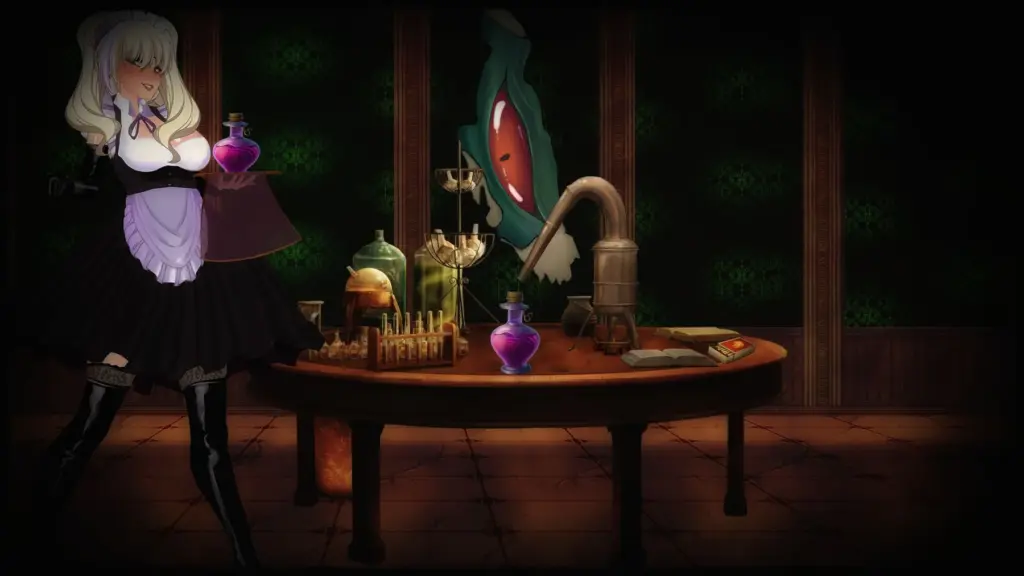
The Dollhouse
The first major trap after the estate is the Dollhouse.
Here, Chelsea faces not just lustful creatures, but a world that wants to turn her into the perfect object.
Gretta offers safety, a new body, beauty, and an eternal role.
The price is the right to change.
The Puppet Master is particularly interested in Chelsea because she embodies a multitude of possible forms. She can be turned into a servant, a toy, a bride, a pet, a mannequin, or a beautiful living doll.
But for Chelsea, any final form becomes a prison.
She can try it on.
She might accept it for a while.
She might even want it.
But if that form closes off all other possibilities, the heroine begins to look for a way out.
In one possible outcome, Gretta truly claims her forever.
In the central course of events, Chelsea escapes from the house—only to find herself in the next, even greater nightmare.
The Jester’s Hellish Universe
After the Dollhouse, Chelsea finds herself in the Jester’s personal universe.
His world consists of reflections of hell, theatrical stages, barons, punishments, and exits, most of which lead only to new traps.
Her prolonged stay and the executions she endures gradually erase Chelsea’s memory. She ceases to understand who she was and exists as an actress in a hellish theater.
This is one of her most devastating defeats.
Chelsea has been robbed of more than just her freedom and her body.
Her name has been taken from her.
And it is here that Jack finds her.
The second chronicle begins with Chelsea having to reclaim her own identity. Jack reminds her of her name, explains that she is trapped in the Jester’s world, and gives her a chance to begin the journey toward freedom. The surviving accounts describe her as an amnesiac actress in an infernal theater, found and freed by the Candle Demon.
Chelsea and the Jester
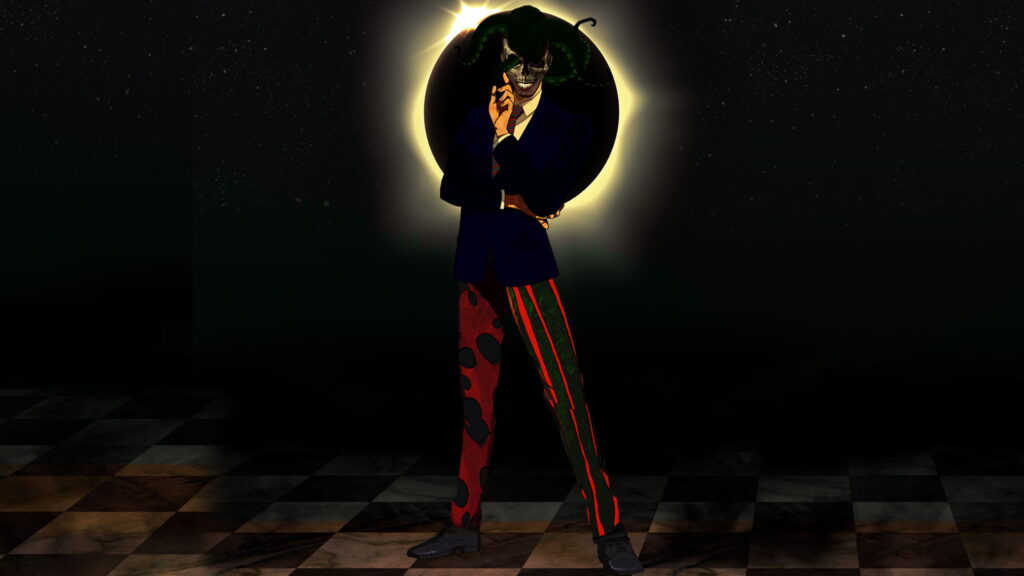
The Jester is Chelsea’s most personal adversary.
He wants more than just her body.
He needs Chelsea as the central figure of the play.
Back in 1585, while still human, the Jester immediately notices her beauty, flirts with her, helps her, and even proposes marriage, reminding her that “Jester” is just a profession.
After torture, execution, the mask, and her merger with Benjamin, the memory of Chelsea does not fade.
It becomes distorted.
Living affection turns into a hellish obsession.
The modern Jester wants to keep Chelsea in his own world, to make her the leading actress, his bride, and a participant in an eternal performance.
His feelings cannot be called entirely false.
There remains in it a trace of the man who once helped her and perished in the same catastrophe as Jack.
But the Jester no longer knows how to love in a way that allows the other person to leave.
He creates worlds in which Chelsea must exist forever.
Therefore, their conflict is not based on a lack of mutual attraction.
It stems from the Jester’s inability to accept her freedom.
The Jester’s Bride
One of Chelsea’s most important alternate forms is the Jester’s Bride.
This isn’t just a wedding outfit or yet another erotic ending.
The Bride signifies the heroine’s final inclusion in the vicious cycle.
She is no longer a temporary actress.
Not a captive searching for a door.
She is not a guest.
She becomes an integral part of the Jester’s universe.
On the surface, such a union may seem beautiful, solemn, and even desirable. But its true horror lies in its eternity.
The Jester gets a woman who will never leave him.
Chelsea gains a world in which any of her desires can be fulfilled.
But all those desires already belong to the director.
This is one possible fate, not the only truth about the heroine.
That is precisely why it is so important: it shows who Chelsea could become if she ever stopped looking for a way out.
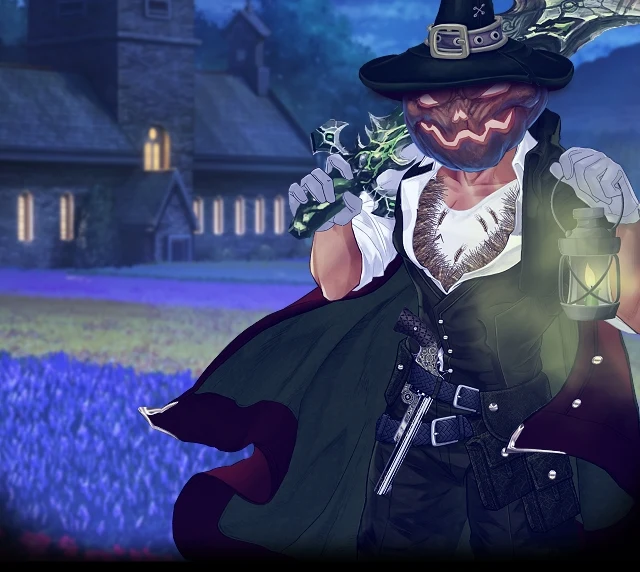
Jack
Jack is Chelsea’s most reliable ally and one of the few men in her life whose affection isn’t based on a desire to possess her.
They met in 1585.
Jack was a living person, a wounded warrior, and Maria’s assistant. An attraction quickly developed between him and Chelsea, but trust became the foundation of their relationship.
He died while holding off Henri and the guards so that Chelsea and Maria could escape.
When the women found his body, Maria proposed the impossible: to replace his lost head with a pumpkin and keep his soul within the reanimated shell.
But Jack could not come to terms with his new form.
So, with his consent, Chelsea immersed his consciousness in a dreamworld—a place where he remained human and felt no pain from his new body.
She promised to bring him back fully one day.
Before leaving, Chelsea asked Maria to keep Jack close to their clan. Centuries later, it is this very request that leads him to Agnet, and then back to Chelsea herself.
Why Jack Stays Close
Jack doesn’t think of Chelsea as a saint.
He knows she’s impulsive, constantly opening dangerous doors, and capable of finding trouble even where there wasn’t any.
He also knows that the witches in his family often take advantage of his power.
But Chelsea once prevented him from disappearing.
She spoke to him as a human being at a time when there was almost nothing human left in his body.
She didn’t subdue his soul by force.
She asked for consent.
She gave him refuge within herself.
That is why Jack returns.
Not as a slave.
Not as a summoned pet.
Not as a man demanding a reward.
He considers Chelsea part of his family.
In a world where almost everyone wants to claim her, Jack defends her right to be herself.
Maria
In 1585, Chelsea meets Maria and learns that she is standing before a distant ancestor.
Maria hasn’t yet acquired the full extent of her family’s knowledge. She knows herbs and senses spirits, but doesn’t know how to use them for protection.
Chelsea offers to teach her.
The transmission doesn’t take the form of an academic lesson. Their family’s witchcraft tradition is tied to the body, trust, and erotic magic. Chelsea explains directly to the embarrassed Maria that there’s nothing shameful about it.
In this episode, Chelsea ceases to be merely an heiress.
She herself becomes the mentor to her own ancestor.
The gift travels in a cycle of time:
Maria passes on her blood to future generations.
Agnet awakens Chelsea.
Chelsea returns and expands on Maria’s knowledge.
Thus, the heroine becomes not the last link in the lineage, but one of the reasons for its existence.
Chelsea in 1585
Once in the past, Chelsea quickly reveals her core character traits.
She is frightened, but she doesn’t lose her ability to think.
She argues with a guard who treats her as a powerless woman.
She explains her origins to Maria.
She looks for a way to help Weber.
She makes a deal with the Jester.
She tries to gain access to the sealed-off store.
Puts herself at risk for the sake of the mechanism.
She doesn’t abandon people she’s known for only a few hours.
When it becomes clear that the situation cannot be resolved with a single action, Chelsea makes the hardest decision: to leave Jack sleeping in his dreams, hand him over to Maria, and leave with Weber’s device toward Agnet’s estate.
She doesn’t defeat the night.
She preserves what can still be saved.
This is the mature side of Chelsea, which sets her apart from the typical heroine of an erotic adventure.
Sometimes the right choice doesn’t lead to a happy ending.
It merely prevents the tragedy from getting even worse.
Melissa
Melissa isn’t just a sister or a minor character.
She is the main proof that Chelsea is more deeply connected to the human world than it might seem.
After Chelsea’s disappearance, the police call off the search. Duke Weber is cleared of suspicion. The estate remains empty.
Melissa continues to search for her sister alone.
The Jester takes advantage of this and lures her to the Theater-Museum with the promise of revealing the secret behind the disappearance.
Later, the sisters are reunited, restore the estate, and continue their search for Agnet. They buy a strange hotel, hoping to invest their remaining funds and use the new location as a base for their next steps.
Chelsea often seems to be the stronger and more experienced of the two.
But without Melissa, she would gradually become a creature from another world.
Her sister reminds her of home, family, and the need to return.
The Difference Between the Sisters
Chelsea relies on intuition, sensuality, and improvisation.
Melissa more often tries to figure out how a trap works, find an object, gather clues, and logically determine the way out.
Chelsea connects with the world.
Melissa explores it.
Chelsea is willing to put herself at risk to change the situation immediately.
Melissa tends to think about the consequences.
But they both share one family trait:
if one sister disappears, the other will follow her to places no sane person would ever go.
That is precisely why the Moonlit World perceives them not as separate individuals, but as an interconnected system.
Duke Weber
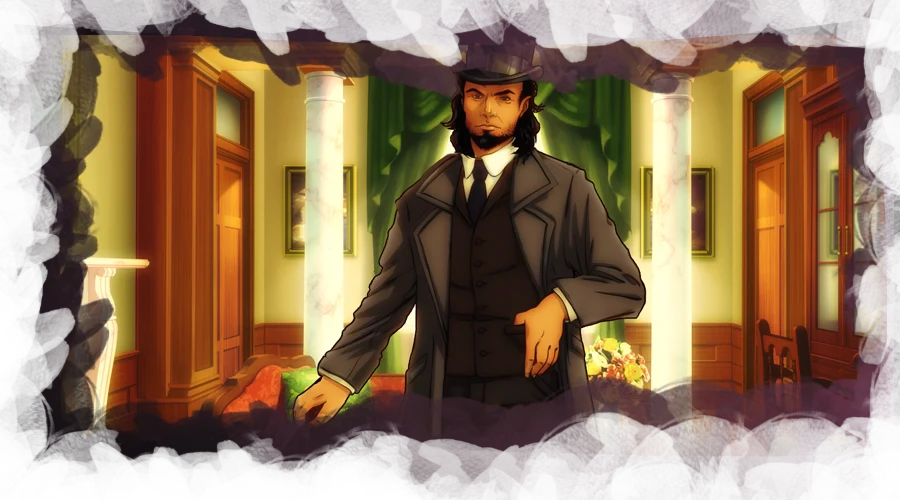
Duke Weber first appears in Chelsea’s life as a calm lawyer executing Agnet’s will.
It later turns out that he is a descendant of Johan Weber and the heir to the family’s philosophy: witchcraft must not be destroyed, but rather appropriated and transformed into a controllable resource.
During the struggle for the estate, Duke kidnaps Melissa and demands that Chelsea gather the power of the thirteen spirits and surrender it to him.
He understands Chelsea well.
She is willing to put herself at risk.
She can give up wealth.
She can endure pain.
But the threat to her sister forces her to act.
Weber tries to turn love into a mechanism of control.
The possible outcomes reveal different sides of Chelsea:
she can comply with the ultimatum and fall into a trap;
exorcise the spirits and foil the plan;
subjugate them with her own power;
call on Jack;
free Melissa and destroy Weber.
In one of the principal outcomes, Jack kills Duke, after which the sisters restore the estate.
Tlazdine
Chelsea’s connection to Tlazdine reveals the most dangerous aspect of her potential.
She can do more than just negotiate with spirits or banish them.
She is capable of subjugating the entire collection through force, compelling the entities to acknowledge her authority.
In this outcome, Chelsea becomes not just a witch, but Tlazdine’s elder sister. The subjugated spirits tear Duke Weber’s soul apart, Melissa gains her freedom, and Chelsea herself continues her journey through other worlds.
This is no longer a young woman merely trying to survive a night in a mansion.
She is a mistress to whom beings who once seemed like gods are now capable of submitting.
But such power comes at a price.
The stronger Chelsea becomes, the further she drifts from an ordinary human life.
The Hotel
After defeating the Duke, Chelsea and Melissa restore the estate, but living solely on their inheritance and surrounded by spirits proves difficult.
They also need resources and a base to search for Agnet.
Chelsea finds an unnamed hotel listed for sale. The sisters leave a deposit and go to inspect the building, where a strange owner offers them an immediate discount and a place to stay for the night.
Thus begins the fourth story.
The estate was Agnet’s inheritance.
The hotel becomes the first major location chosen by Chelsea herself.
But her choice once again leads to portals, the Weber Resonator, disappearances, and the Moonlit World.
This highlights both the heroine’s gift and her curse:
Chelsea no longer simply stumbles upon the supernatural.
The supernatural finds her almost anywhere.
The Moonlit World’s Magnet
At the hotel, Chelsea and Melissa learn that their significance extends far beyond their personal adventures.
A denizen of the Moonlit World explains: the sisters are unique magnets and sources of energy.
Before their arrival, the world existed in a state of near-stillness. Dead gods and frozen demons drifted in the green mist.
First, Agnet created portals.
Then Chelsea passed through the Dollhouse and entered the Jester’s universe.
After that, both sisters began to nourish the Moonlit World with the very act of travel, choice, fear, and return.
They want to leave them there as eternal generators.
This reveals Chelsea’s true magnitude.
She isn’t the strongest entity physically.
But her presence sets worlds in motion.
Wherever Chelsea goes:
ancient powers awaken;
forgotten doors open;
loops are broken;
creatures remember their desires;
others’ fantasies take shape;
stable systems begin to change.
She is not merely a traveler between worlds.
She is a catalyst.
Chelsea as the Human Center of the Universe
Almost all significant beings surpass Chelsea in power.
The Jester can create worlds.
Gretta changes bodies and souls.
Jack is nearly immortal.
Baphomet rules the fortress and the distortions.
The Nightmare Merchant moves artifacts between eras.
Shogot exists simultaneously through a multitude of doors.
But Chelsea’s world is named after her not because she is stronger than everyone else.
She makes their stories personal and relatable.
Through her, the Jester becomes not just a clownish demon, but a person whose love has been mangled.
Through her, Jack transforms from a reanimated scarecrow into a loyal friend.
Through her, Agnet becomes not just the mistress of spirits, but part of the family.
Through her, Maria gains a future.
Through her, Melissa becomes a heroine.
Through her, the Moonlit World awakens.
Chelsea brings together characters who, without her, would exist in separate fairy tales.
Personality
Practicality
Chelsea makes no secret of the fact that she’s accepting the will for the money.
She’s capable of thinking about her own benefit and doesn’t pretend to be a selfless saint.
Curiosity
A closed door almost always makes her want to find out what’s inside.
This helps her find answers but regularly leads her into new traps.
Audacity
Chelsea argues with guards, demons, inquisitors, and creatures capable of destroying her with a single move.
Sometimes it’s bravery.
Sometimes it’s a lack of self-preservation.
Empathy
She quickly grows attached to people and creatures if she sees a personality in them.
That’s exactly why she tries to save Weber, the Jester, and Jack, even though she’s known them for only a short time.
Sensuality
Chelsea views the body as an integral part of one’s personality and strength.
She doesn’t suppress her desires just to fit the image of a “proper heroine.”
Unpredictability
No one can be sure what she’ll choose.
She might agree, and then walk away.
Refuse, and then return.
Submit to a role and use it against her master.
Stubbornness
Even having lost her memory, Chelsea continues to search for a way out.
Stubbornness outlasts the knowledge of one’s own identity.
Loyalty to Family
The key decisions in the later parts of the story are no longer about wealth, but about saving Melissa, Agnet, and Jack.
She matures, but she doesn’t turn into a flawless martyr.
Chelsea’s Strength
Chelsea’s greatest strength is her ability to adapt without completely losing herself.
She is able to embrace the laws of a foreign world deeply enough to make use of them.
In the Dollhouse, she understands the language of roles and desires.
In the Jester’s Hell, she learns the rules of performance and contracts.
In 1585, she learns the constraints of the era and the danger of the Inquisition.
At the estate, she learns the conditions that govern its spirits.
In the Moonlit World, she learns the nature of energetic bonds.
Chelsea doesn’t necessarily conquer the outside world.
She enters its logic, finds a contradiction, and turns it into a door.
Weaknesses
Curiosity
It’s almost impossible to convince Chelsea to keep a secret.
Self-Confidence
After a few victories, she may decide she can negotiate with any creature.
Sometimes this is a mistake.
Desire to Save Everyone
She tries to help people who later betray her, like Johan Weber.
Sister
Melissa is her strongest leverage.
Enjoyment
Chelsea is capable of forgetting the danger if someone else’s game really captivates her.
Incomplete Knowledge
For most of the story, she acts without the full picture and only learns the cost of her decision after she’s made it.
Blurring of Identity
Frequent transformations, roles, and transitions make the question of “the real Chelsea” increasingly complex.
She returns, but every world leaves its mark.
Chelsea embodies freedom within desire.
Agnet proves that a monster can be tamed by understanding its nature.
The Jester shows how love turns into possession.
Gretta shows how care turns into unchanging eternity.
Henri shows how power turns violence into law.
The Webers—how knowledge turns a living being into a resource.
Jack—how loyalty can outlive death.
Melissa—just as love compels you to follow it into an impossible world.
And Chelsea ties it all together with one question:
What can a person accept, experience, and endure without ceasing to be true to themselves?
She doesn’t have a single definitive answer.
That’s why the story continues.