| NATURE | Human; the youngest heiress of the family |
|---|---|
| ROLE | Explorer, savior, temporary counterbalance to Chelsea |
| MAIN POWER | Observational skills, compassion, resistance to being rewritten |
| MAIN WEAKNESS | Gullibility, hope, fear of loneliness |
Melissa is gentler than Chelsea, but no weaker. Where her older sister breaks the rules, the younger one understands why they work.
Full Name: Melissa; last name undisclosed
Nature: Human, heir to Maria’s line of witches
Status: Chelsea’s sister, explorer of supernatural realms, and one of the two key figures in the Moonlit World
Relatives: Chelsea, her sister; Agnet, her aunt; Maria, her distant ancestor
Main Enemies: The Jester, Duke Weber, the Puppet Master, and the forces of the Moonlit World
Key Trait: Willing to venture into the unknown not for curiosity or power, but to save someone she loves
Threat Level: Seemingly low; in reality, capable of dismantling closed systems by uncovering their internal rules
Main Weakness: Trusts people longer than they deserve
Main Strength: Even monstrous betrayal cannot make her cruel or indifferent
General Description
Melissa is the younger-at-heart, gentler, and calmer half of the sisters’ story.
She is intelligent, beautiful, observant, and significantly kinder than Chelsea. She has little interest in ancient rituals, infernal collections, erotic spirits, or the chance to become a powerful witch. If events had unfolded normally, Melissa probably wouldn’t have sought out doors to other worlds at all.
She entered this story for one reason:
Chelsea had disappeared.
When the police closed the investigation, Duke Weber was cleared of suspicion, and hope for a conventional explanation had all but vanished, Melissa continued her search.
She didn’t receive an inheritance.
She wasn’t promised ten million.
Agnet didn’t leave her a challenge.
No one had designated her as the chosen one.
Melissa decided on her own to keep going because she couldn’t accept the idea that her sister had vanished without a trace and that no one else would try to find her.
That is exactly what sets her apart from Chelsea.
Chelsea enters the otherworld out of curiosity, desire, ambition, and stubbornness.
Melissa enters it out of love.
Appearance
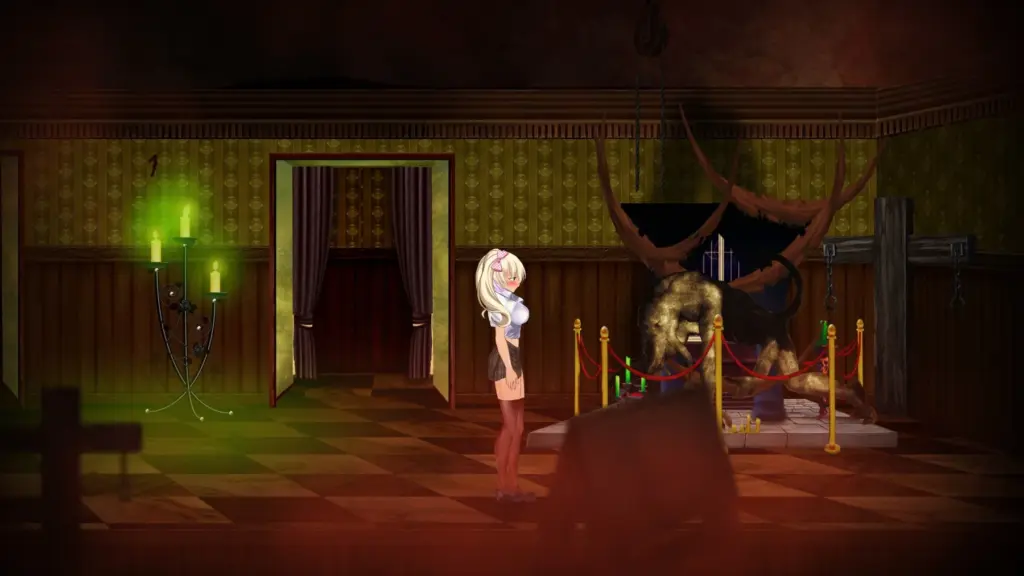
Melissa is a young adult woman with long blonde hair, bright green eyes, and soft facial features.
Her beauty is less provocative than Chelsea’s. There is more openness, tenderness, and apparent vulnerability about her. Even when Melissa finds herself in provocative clothing or a revealing situation, she retains the expression of someone who is still trying to understand what’s happening, rather than immediately turning the encounter into her own game.
Her light hair and green eyes visually link her to Agnet, but Melissa’s personality is noticeably different from her aunt’s.
Agnet looks at the unknown creature and thinks:
How can I tame it?
Chelsea thinks:
What can I get out of this, and how do I get out of it afterward?
Melissa asks first:
What happened to you, and can I help you?
That kindness is what makes her attractive.
But she regularly lures Melissa into traps.
Not a Second Chelsea
It’s easy to think of Melissa as just a more naive version of her sister, but that would be wrong.
She’s no weaker than Chelsea.
She just has a different way of doing things.
Chelsea improvises, takes risks, and often tests other people’s rules with her own body. She quickly accepts the world’s strangeness and almost immediately starts looking for ways to use it against her opponent.
Melissa takes longer to find a rational explanation.
She surveys the area.
She collects objects.
She listens to testimonies.
She compares contradictions.
She tries to establish the sequence of events.
She notices things that others consider insignificant.
Chelsea makes contact with the monster.
Melissa investigates the crime scene the monster left behind.
This doesn’t mean that Melissa is cold or lacking in sensitivity. On the contrary, she is emotional and capable of feeling deeply about what is happening. But before she accepts someone else’s game, she needs to understand why she ended up here in the first place.
That is precisely why her primary space becomes not Agnet’s estate, but the Jester’s Theater-Museum.
The estate offers a choice.
The museum offers a riddle woven from the tragedies of others.
Life Before Chelsea’s Disappearance
Little is known about Melissa’s former life.
She was not an initiated witch and did not pursue the supernatural. Agnet did not choose her as her first heir, and Chelsea did not have time to explain to her sister exactly what was happening at the estate.
For Melissa, it all began as a routine missing-person case.
Chelsea set out to fulfill a strange condition in the will.
After that, she stopped responding.
The police conducted an investigation.
Duke Weber, the last person to see Chelsea before she arrived at the estate, came under suspicion, but no evidence was found against him.
Eventually, the official search was called off.
The estate stood lifeless.
No messages, phone calls, ransom demands, or clear clues ever surfaced.
Only Melissa continued to search.
She spent time, energy, and money, even though the very length of the search already suggested it was hopeless.
This part of her story is particularly important.
Melissa has no proof that Chelsea is alive.
She doesn’t hear her sister’s mysterious voice.
She doesn’t receive any magical visions.
She simply refuses to treat the absence of evidence as proof of death.
The Invitation
One day, there was a knock at Melissa’s door.
There was no one there.
There was an invitation to the recently opened Jester’s Theater-Museum.
An unknown “friend” promised to reveal the secret behind Chelsea’s disappearance, but demanded that the visit be kept secret.
A sensible person would have gone to the police.
Show them the letter.
Not to go alone.
Check the building’s owner.
But official channels had already proven fruitless.
The invitation was the first real lead in a long time.
Melissa knew the offer was suspicious. However, the chance to find out even a little something about Chelsea outweighed her fear.
She went to the museum.
This decision clearly illustrates her gullibility.
Melissa doesn’t believe everything she reads.
She simply still believes that someone with information about her missing sister might genuinely want to help.
The Jester is not exploiting her naivety.
He’s exploiting her hope.
The Jester’s Theater-Museum
A False Promise
At the entrance, Melissa is greeted like any other visitor.
Her invitation is checked, and she is told about the collection of mysteries gathered from different times and worlds. She is promised that she will find the information she’s looking for among the exhibits.
But it becomes clear almost immediately that Chelsea wasn’t the target of the tour.
Melissa has been deceived.
The museum staff mock her, claim that her sister is happy in another world, and demand that she bring the exhibits to life.
She can’t leave.
She can’t set conditions.
To move forward, Melissa must enter other people’s stories, interact with their inhabitants, and decide what will happen in each scene.
The Jester didn’t bring her here to provide an answer.
He brought a new spectator, an actress, and a source of power.
Living Exhibits
The exhibits at the Theater-Museum are not wax figures or theatrical sets.
They are living loops, pieced together from different times, worlds, and human nightmares.
Melissa encounters:
an occult tomb;
a village overrun by infernal creatures;
a space expedition to a hostile planet;
a hospital where the future Jester, Gretta, the Keykeeper, and the Nightmare Merchant were held;
cultists;
mutants;
a cursed city;
creatures trapped in repeating stories.
Each scene has its own rule.
In some, you must find an object.
In some, you must decide who to trust.
In some, you must free a captive.
In some, you must seal away a creature.
In some, you must not let a beautiful and convincing story hide the horror unfolding.
Melissa wasn’t ready for a journey like this.
But the museum unexpectedly suits her way of thinking.
It consists of clues.
An Explorer of Other People’s Stories
Melissa doesn’t have the experience of Agnet or Chelsea.
But she’s good at spotting inconsistencies.
She asks:
Why is the exit closed?
Who left this item here?
Why does this person claim to know me?
What will change once the mechanism is activated?
Why do the different versions of events contradict each other?
Who stands to gain if I believe this particular story?
Her method recalls Clarice Starling.
Not because Melissa is literally an agent, but because she approaches danger through observation, questions, and detail.
She enters the space created by a dangerous mind and tries to understand it through the details.
She doesn’t compete with the monster in physical strength.
She listens.
She asks questions.
She observes how it formulates its response.
She looks for vulnerabilities in its own logic.
Melissa often trusts her conversation partner longer than Chelsea does. But it is precisely because of this that people and creatures sometimes tell her more than they intended to.
Her trust can be a weakness.
But trust is also a way to gain recognition.
Trust Is Not Stupidity
Melissa is truly trusting.
She wants to believe that a person asking for help isn’t setting a trap.
That the researcher cares about the discovery, not about his own power.
That the captive is telling the truth.
That the promised exit really does lead outside.
But Melissa is capable of revising her conclusions.
When the evidence no longer matches the story, she changes her mind.
Her problem isn’t an inability to recognize lies.
She gives the liar too much time to prove they’re honest.
Chelsea tends to assume right away that someone is trying to manipulate her.
Melissa initially assumes good intentions.
Because of this, she’s easier to lure in.
But it’s harder to turn her into a truly cruel person.
Even after the museum visit, she doesn’t come to the conclusion that she shouldn’t help anyone.
She learns to be cautious.
Kindness in a World of Traps
Many scenes in the museum are designed to punish compassion.
A captive might turn out to be bait.
A vulnerable woman may be part of the ritual.
A wounded explorer is already a dead memory.
An offer of exchange is a new way to continue the sacrifice.
Nevertheless, Melissa continues to try to help.
She differs from Agnet, who judges creatures based on their usefulness and the rules.
She also differs from Chelsea, who often views contact as a game of give-and-take.
Melissa sees, first and foremost, a person in trouble.
This makes her a more human heroine.
At the same time, this makes her the perfect victim for worlds that feed on hope.
Erotic Nature
Melissa is also a protagonist of this adult dark-fantasy world, but her eroticism is expressed differently from Chelsea’s.
Chelsea often sets the tone of a scene herself. Her sexuality is provocative, assertive, and almost ostentatious. She can enter into a dangerous game, fully aware of what she’s doing, and try to take control.
Melissa’s sensuality is gentler.
It is linked to:
trust;
curiosity;
shyness;
the desire to be liked;
the need for closeness;
the gradual discovery of her own fantasies;
unexpected pleasure in a situation she initially considered only dangerous.
This does not make her passive.
Melissa is capable of agreeing, refusing, changing her mind, or responding to another person’s attention. But she needs more time to distinguish her own desires from someone else’s influence.
She isn’t ashamed of her body in the way that the traditional image of a “good girl” would require.
She’s simply not used to viewing sexuality as a weapon.
Chelsea can consciously seduce the monster.
Melissa more often finds that the monster has already understood her desire before she has.
An Innocent Image and a Mature Heroine
Melissa’s gentle exterior creates an important contrast.
She looks like the kind of young woman one instinctively wants to protect from what is happening.
But time and again, the world forces her to make adult decisions on her own.
The erotic scenes with Melissa work not because she is a helpless counterpart to Chelsea.
They depict the clash between trust and a dangerous desire.
Melissa may want intimacy without wanting to be owned.
She might give in to temptation and later realize she was used.
She may experience pleasure while simultaneously looking for a way out.
As in Chelsea’s case, pleasure does not negate freedom.
But Melissa has to learn this lesson while already trapped.
The Jester
The Jester sees Melissa first and foremost as a way to get to Chelsea.
He exploits her love for her sister, sends an invitation, and promises information he has no intention of sharing honestly.
But after Melissa arrives at the museum, she becomes interesting to him in her own right.
She’s different from Chelsea.
She doesn’t argue with the host from the very beginning.
She spends more time trying to understand what’s going on.
She more often complies with the exhibits’ requests.
She lacks prior experience interacting with infernal beings.
The Jester takes this as a sign of weakness.
He thinks Melissa will become a more obedient actress.
But it is precisely her lack of familiarity with his world that makes her actions less predictable.
She doesn’t know how to “properly” play a role in the Jester’s theater.
Therefore, she may accidentally disrupt the carefully constructed balance.
The Downfall of the Illusion Engineer
One of the most significant possible outcomes of the museum is that Melissa seals away the fantasies.
The Jester loses the ability to control them, his powers wane, and Melissa breaks free and heads to the estate to personally verify what has happened to her sister.
This is a very fitting ending for her character.
She does not defeat the Jester in a duel.
She does not become stronger than the ancient entity.
She deprives him of his functioning system.
Melissa realizes that the exhibits are sources of manifestation and shuts them down.
Just as Chelsea is looking for a way out of the performance, Melissa shuts down the stage equipment.
Pumpkins and Jack
Inside the museum, Melissa gets the chance to collect four pumpkins.
They serve as beacons for the Candle Demon.
If placed correctly, Jack can find his way into the Jester’s fantasies.
For Melissa, this is her first significant encounter with a creature connected to her family long before she was born.
She doesn’t yet know Jack’s full story.
She doesn’t know that Chelsea saved his soul in 1585.
She doesn’t understand why the pumpkins allow him to cross between worlds.
But she accepts his help.
In one possible outcome, Jack holds off the ghosts while Melissa escapes the museum.
In another timeline, he completely stops the show and leads her outside.
Jack saves Melissa not just because he was asked to.
She belongs to Maria’s lineage.
His long-standing duty as a guardian extends to her as well.
After the Museum
After escaping from the Theater-Museum, Melissa does not return home or try to forget what happened.
She heads to Agnet’s estate.
Up until that point, her goal had been to find information about Chelsea.
Now she knows that the disappearance isn’t related to an ordinary crime.
Other worlds exist.
The Jester is real.
Spirits are capable of trapping people in loops.
Pumpkins can summon a reanimated scarecrow.
Her rational view of the world has been shattered.
But instead of giving up her search, Melissa changes her approach.
She goes back to where it all began.
Almost at the same time, Chelsea also escapes her own hell and returns to the estate, but the sisters don’t meet right away. They pass each other by, separated by yet another system of traps and passageways.
This becomes a recurring theme in their story:
both are searching for each other;
both are very close;
but there’s always one more door between them.
Duke Weber
Duke quickly realizes that Melissa is his strongest leverage over Chelsea.
He doesn’t try to persuade the witch with scientific curiosity, inheritance, or power.
He simply gains control over her sister.
After that, he demands that she transfer the power of the thirteen spirits to him.
The threat works precisely because Chelsea knows that Melissa came into this world solely for her sake.
If her sister comes to harm, Chelsea will blame herself.
In several possible outcomes, Duke doesn’t keep his promise even after getting what he wants. He keeps both sisters with him or continues to use Melissa as a hostage.
This does not make Melissa a helpless character.
Her abduction exposes the vulnerability of Weber’s entire system.
He is unable to obtain the power he needs on his own.
He needs Chelsea.
Melissa is essential to managing Chelsea.
The sisters are two parts of a single mechanism that Duke cannot replicate artificially.
Melissa and Agnet
Agnet did not choose Melissa as her first heir.
It was Chelsea who received the estate, the bank accounts, and the initiation.
But in the end, Melissa turns out to be just as important for continuing the family line.
She enters the supernatural world without Agnet’s training and without the promised reward.
No one tells her:
“These miracles can be yours.”
She sees only the consequences of others’ decisions:
her missing sister;
an abandoned estate;
the Duke’s lies;
the Jester’s museum;
living exhibits;
worlds from which it is impossible to simply leave.
That’s why Melissa takes a more cautious approach to magic.
She doesn’t seek to collect creatures like Agnet does.
She doesn’t want to turn her home into a hellish collection.
She doesn’t get excited about every new portal.
But if understanding how magic works is necessary to save a loved one, Melissa will see it through to the end.
She hasn’t inherited Agnet’s passion.
She is the heir to her observational skills.
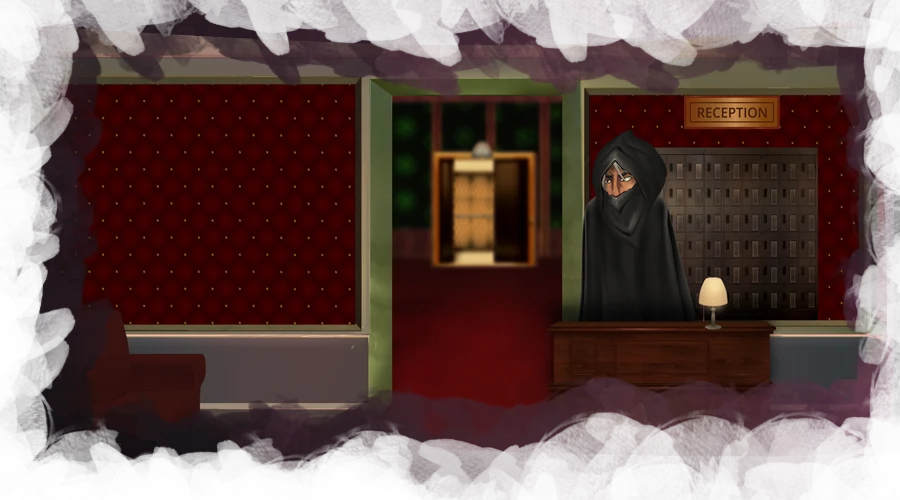
The Hotel
After liberating and restoring the estate, the sisters are trying to build at least a relatively normal life.
They need money, work, and a place they can use as a base for their continued search for Agnet.
That’s how the hotel comes into their story.
Unlike the estate they inherited, the hotel is a joint decision by Chelsea and Melissa.
This is where their differences in lifestyle are particularly evident.
Chelsea is quicker to adopt a risky or provocative approach to solving a problem.
Melissa thinks about expenses, work, the condition of the rooms, and the need to keep everything in order somehow.
When the money runs out, she has to put on a maid’s uniform and clean the rooms herself. She is embarrassed by the prospect of enduring harassment and doing unpleasant work, but she agrees anyway because the hotel must keep running.
Chelsea promises to join her.
This is no longer a story of a rescuer and the rescued.
The sisters become partners.
The Well
In the hotel basement, Melissa discovers a strange well.
A glow emanates from it, and she is overcome by a desire to relinquish control, to allow herself to be bound, and to shift the burden of decision-making onto someone else.
Melissa is frightened by her own thoughts and leaves.
She doesn’t pretend to be completely immune.
She honestly tells Chelsea what she felt.
This is an important trait.
Many characters in the world hide the influence because they’re ashamed of their desires. This gives the entity additional power.
Melissa may be embarrassed, but she still tells her sister the truth.
By doing so, she already weakens the well’s influence.
She doesn’t have to fully understand a desire to acknowledge its existence.
Sisters at Different Times
At the hotel, a new aspect of the bond between Chelsea and Melissa is revealed.
To appease the spirits and obtain the keys, the actions of just one sister are not enough. Every entity must be pacified in both the past and the present.
Chelsea acts in one timeline.
Melissa acts in another.
The key appears only when both sisters fulfill their respective parts.
It’s impossible for them to simply be together.
They must work together across the time gap, sometimes without even being able to properly explain to each other what’s happening.
This turns their sisterly bond into a truly magical phenomenon.
Chelsea and Melissa aren’t two separate witches of the same type.
They complement each other.
One works with desire and the living manifestation of power.
The other notices patterns, regularities, and consequences.
Together, they can complete the process within a specific time frame.
Connection to the Moonlit World
The inhabitants of the Moonlit World regard both sisters as sources of energy.
Chelsea opens doors, makes contact, and awakens entities.
Melissa solidifies the connection through observation, repetition, and an attempt to understand what has happened.
This can be compared to an electrical circuit.
Chelsea creates the impulse.
Melissa closes the circuit.
That is precisely why it is not enough for the Moonlit World to obtain just one of them.
It seeks to keep both sisters as permanent sources of power.
Melissa is no less important; it’s just that her influence isn’t as spectacular.
She doesn’t summon a demon with a single gesture.
But when Melissa begins to search for an explanation, the anomaly takes on form, sequence, and stability.
She transforms the nightmare from a random flash into a story that can be experienced from beginning to end.
Melissa’s Witch’s Gift
Melissa doesn’t demonstrate her gift in the same way as Agnet or Chelsea.
She doesn’t seek to summon creatures and rarely views erotic contact as a magical tool.
But Maria’s blood runs in her veins as well.
Her abilities manifest differently.
A Sense of Incongruity
Melissa notices when a space, a story, or a person is out of balance.
Resistance to Rewriting
She may believe an illusion at first, but over time she begins to notice contradictions and regain her own memory.
Connection to Objects
Melissa has a keen understanding of the significance of clues, fragments, landmarks, and items left behind after events.
Temporal Resonance
She is capable of participating in processes that occur simultaneously across different temporal layers.
Sisterly Bond
Even without seeing Chelsea, Melissa continues to move in the direction of her trail.
This isn’t ordinary telepathy.
Rather, it’s a family ability to find their way through the consequences of each other’s actions.
Soothing Spirits
Melissa doesn’t necessarily subdue the spirit. She can bring its story to a close, return an object, correct a mistake, or perform an action that frees the spirit from having to relive a particular scene.
Her magic is not like a command.
It’s more like finding the right answer.
Melissa and Chelsea
The sisters’ relationship is the emotional center of the entire later story.
Chelsea often acts as if she’s obligated to protect Melissa from what’s happening.
But it was Melissa who continued the search when the rest of the ordinary world had already given up on Chelsea.
She entered the Jester’s Museum without any preparation.
She made her way through the living exhibits.
She made it to the estate.
She became the Duke’s hostage.
She worked alongside Chelsea at the hotel.
She helped calm the spirits across different time layers.
That’s why Melissa can’t be considered just a sister who constantly needs to be rescued.
She herself is the very reason Chelsea can return to human life at all.
Without Melissa, Chelsea would have gradually faded away into alien worlds.
She would have become a mistress of spirits, an actress in the Jester’s theater, a powerful witch, or a creature of the Moonlit World.
Melissa reminds her that returning still makes sense.
Love Without Idealization
Melissa doesn’t think Chelsea is flawless.
She knows that her sister is:
impulsive;
is capable of hiding dangerous information;
makes questionable decisions;
saves money in strange ways;
gets used to the supernatural too easily;
sometimes thinks she’ll be able to fix everything later.
Melissa can argue, get upset, and disagree.
But when Chelsea disappears, none of that matters anymore.
She isn’t looking for a perfect heroine.
She’s looking for a sister.
This makes their bond more compelling than the typical fairy-tale loyalty.
Melissa loves Chelsea not because she’s always right.
She loves her, flaws and all.
Attitude Toward Fear
Melissa is afraid more often and more visibly than Chelsea.
She can admit that a place scares her.
She doesn’t want to go into the dark forest.
She senses danger in the silence.
She’s embarrassed by her strange desires.
She tries to find a safe option first.
But her fear doesn’t stop her completely.
Here we see the influence of Sophia Lillis’s heroines: a young, seemingly vulnerable woman finds herself facing something ancient and monstrous, yet continues to act because retreat would mean abandoning those she loves.
Melissa isn’t fearless.
Her courage exists precisely because she is afraid.
She takes the next step not because she’s confident of victory.
She simply considers giving up the worst option.
Possible Fates
Like Chelsea, Melissa has many possible fates.
She can:
seal the museum’s fantasies and strip the Jester of his power;
free the exhibits and release them into the human world;
maintain the precarious balance and find herself in a new time loop;
use the ghostly keys to escape;
summon Jack;
end up in the Moonlit World;
become a puppet;
remain a living exhibit;
fall under Duke Weber’s control;
reunite with Chelsea;
continue the search for Agnet.
These options are not equally historical, but they all reveal different aspects of her character.
The ending of “The Sorceress’s Doll” is particularly important.
After going through all of the Jester’s fantasies, Melissa may decide that existing as a toy is the best future for her. Then the Puppet Master grants her wish.
This is a tragic outcome not because Melissa is necessarily deceived.
But because exhaustion can force a kind person to accept the loss of choice in exchange for peace of mind.
Strengths
Intelligence
Melissa is skilled at piecing together scattered information and noticing connections between objects, scenes, and words.
Observational Skills
She pays attention to details that Chelsea might miss when acting too quickly.
Empathy
Melissa is able to get a frightened person or spirit—who doesn’t trust the more domineering witch—to open up.
Loyalty
She keeps looking for Chelsea after everyone else has given up.
Ability to Learn
Every trap makes her more cautious, but doesn’t rob her of her humanity.
Practicality
At the hotel, Melissa thinks not only about magic, but also about money, repairs, cleaning, and day-to-day work.
Resilience
She may be deceived, but she doesn’t necessarily remain trapped in that deception forever.
Sisterly Bond
Her presence keeps Chelsea connected to the human world.
Weaknesses
Gullibility
Melissa assumes for too long that the person she’s talking to might be telling the truth.
Desire to Help
She is capable of putting herself in danger for the sake of someone she barely knows.
Lack of Experience
At first, she struggles to distinguish a genuine captive from an image created by the Jester.
Hope
A promise of information about Chelsea is almost guaranteed to keep her moving forward.
Embarrassment
It’s harder for Melissa to speak openly about her own desires, which gives certain entities the opportunity to exploit them covertly.
Fear of Loneliness
Confined spaces and the disappearance of companions affect her more strongly than they do Chelsea.
Tendency to Take the Blame
If an attempt to help ends in tragedy, Melissa spends a long time believing she should have recognized the trap sooner.
Melissa embodies a kindness that has endured through a nightmare and has not faded.
Chelsea represents freedom within desire.
Agnet represents power through an understanding of the monster’s nature.
Jack is loyalty that has survived death.
The Jester is love that has turned into possession.
Gretta is care that has become eternal possession.
Henri represents cruelty that has been legally justified.
The Webers embody reason that has reduced living beings to resources.
Melissa remains the person who asks:
Can someone be saved without being turned into a possession?
She doesn’t always get a positive answer.
But she keeps asking.