| NATURE | A man who became an infernal executioner |
|---|---|
| OTHER NAMES | The Inquisitor, The Hammer of Witches |
| DOMAIN | The Inquisition’s stronghold; the hour of the wolf |
| MAIN POWER | Sentence, Hunting Through Fear, Suppression of Spirits |
Henri declares desire a crime, but his power grows precisely from the shame, pain, and suppressed lust of others. He does not destroy vice—he claims the right to punish for it.
Henri Sanson, the Executioner
Other Names: The Inquisitor, the Executioner, Hunter of the Hour of the Wolf
Original Nature: Human
Subsequent Nature: Infernal executioner and hunter of witches and spirits
Main Enemies: Jack, Chelsea, Maria, and Maria’s lineage
Main Book: *The Hammer of Witches*
Key Trait: Turns law, religion, and human shame into instruments of torture
Danger Level: Extremely High
Final Death: Possible only at the hands of a being capable of acting simultaneously in the world of the living and the spirit world
General Description
Henri Sanson is one of the most brutal adversaries in Chelsea’s history.
He was not born a demon, was not possessed, and did not become a monster due to a tragic mistake. While still human, Henri consciously chose the path of an executioner because this profession allowed him to inflict pain with impunity.
For him, religion was not a matter of faith.
The Inquisition was not a calling.
The *Hammer of Witches* was not a holy book.
All of this served as a justification for his true passion: gaining power over people, breaking their bodies, and forcing those around him to thank him for the work he had done.
Henri was particularly fond of witch trials. An accusation of witchcraft allowed him to detain a woman with almost no evidence, strip her during an “examination,” subject her to torture, force her to confess, and then carry out a public execution. For each such execution, he received money, the church’s approval, and the respect of the city authorities.
He had found a rare situation in which personal sadism was considered a public service.
After Henri’s death, he only grew worse.
The human body no longer held him back. He transformed into a hellish Inquisitor, capable of hunting not only living women but also ghosts, witches, and creatures already beyond the bounds of the ordinary world.
Other spirits feared him not because he was the most ancient.
They feared him because even after death, Henri continued to do what he had devoted his human life to:
finding a victim, declaring her guilty, and turning punishment into pleasure.
Henri in Life
In 1585, the name Henri Sanson was known throughout the city.
Maria warned Chelsea that Henri had sent people to the stake for far weaker suspicions. The Jester called him the city’s guardian and executioner, a man who rarely showed mercy, and claimed that the bishop himself had blessed Henri’s campaign against witchcraft.
Formally, Henri served the law.
In reality, he had created a system around himself in which almost anyone could become a criminal.
Herbs became evidence of witchcraft.
Unusual clothing was seen as evidence of a connection to evil forces.
Sexual freedom was a sign of depravity.
An attempt to defend the accused was considered complicity.
Even remaining silent during interrogation could be portrayed as obstruction of justice.
Henri wasn’t looking for the truth. All he needed was a pretext to initiate a process from which a person could never return to their former life.
If the accused confessed, she confirmed that he was right.
If she denied it, it meant the devil was giving her the strength to resist.
If she could not withstand the torture, Henri would obtain a confession.
If she died, no one could challenge the verdict anymore.
He built a world in which he was always right.
*The Hammer of Witches*
“The Hammer of Witches” was Henri’s go-to book, but not because he sincerely shared the religious zeal of its authors.
He studied it the way a craftsman studies a reference book.
He was interested in:
which aspects of female behavior could be declared signs of witchcraft;
What questions cause the defendant to contradict herself;
how to present torture as a necessary part of the investigation;
how to convince witnesses that cruelty is being committed for their own protection;
how to turn personal desire into the fulfillment of official duty.
The margins of his copy were filled with his own notes.
But Henri rarely jotted down theological musings there. He was interested in the human body’s reactions: how long a person can go without sleep, when pain renders speech impossible, what kinds of humiliations most quickly shatter pride, and what causes a crowd to stop seeing the accused as a living being.
He did not believe the book unconditionally.
He refined it.
For a true fanatic, torture is a means of extracting a confession.
For Henri, a confession was merely permission to continue the torture.
Depravity
Henri never confined his desires to the walls of the dungeon.
When he wasn’t conducting interrogations and executions, he was welcomed into high-class brothels. There, he was known as a generous, influential, and extremely dangerous guest.
Courtesans would disappear after meeting with him. Later, some were found outside the city. But Henri’s position allowed him to sweep such cases under the rug, declaring the dead to be runaways, thieves, or women involved in witchcraft.
He did not view intimacy as a pleasure shared between two people.
He demanded dominance.
Henri was aroused by:
fear;
helplessness;
public humiliation;
the inability to refuse;
control over a woman’s reputation;
the certainty that no one will believe the victim after what has happened.
In this, he differed fundamentally from most of the erotic beings in Chelsea’s world.
Shogot teases and then lets go.
The Jester tempts and assigns roles.
The Nightmare Merchant bargains.
Henri wants there to be no choice.
That’s why even many infernal beings found him repulsive. They might be lustful, cruel, or dangerous, but Henri turned the humiliation of others into a system and called it justice.
Meeting Chelsea
Henri was immediately intrigued by Chelsea.
She was beautiful, dressed provocatively, spoke in an unusual way, and showed none of the usual fear of a man of his standing.
For Henri, that was enough.
When Chelsea tried to gain access to Weber’s sealed-off store, the executioner offered her a humiliating deal. He saw no need to hide his intentions: his power allowed him to turn coercion into official mercy.
But Henri’s interest in Chelsea quickly went beyond mere lust.
He sensed that she was more than just a stranger.
Chelsea knew his name.
She spoke as if she already understood how his life would end.
She didn’t take religious threats seriously.
And she was close to events that defied the usual laws of the world.
Henri wanted her entirely: her body, her confession, her secrets, and her ability to look at him without submission.
He didn’t want Chelsea as a woman.
He desired her as his most elusive prey.
The Jester
The Living Jester was, for Henri, almost the perfect victim.
The clown helped Chelsea, was connected to Weber, harbored fugitives, and had a reputation as a debauched street performer. After Weber’s testimony, Henri had enough details to portray the Jester as a participant in a witchcraft conspiracy.
He decided not to simply execute him.
Henri wanted to destroy the very image the Jester embodied.
The performer was deprived of sleep, kept under constant light, beaten, and humiliated. He was stripped naked and paraded through the streets, allowing townspeople and courtesans to laugh at the man who had once commanded the crowd’s attention himself.
Henri explained to him that at the execution, no one would see a cheerful clown.
People would be shown a “depraved” criminal associated with witches, debauchery, and evil forces.
For the Jester, this was torture not only of the body.
He was stripped of the right to define his own role.
After the execution, the Nightmare Merchant took the mask from the charred skull. It was from this mask that the curse of the modern Jester later arose.
Thus, Henri had no intention of creating a powerful entity.
But his cruelty became one of the main ingredients from which it emerged.
Weber’s Betrayal
Johan Weber helped Henri bring the matter to a swift conclusion.
When the scientist was captured, he turned his back on his friends and portrayed himself as a random bystander who had realized the danger of what was happening just in time.
He told the Inquisition about Chelsea, Maria, Jack, and the Jester. These were not vague rumors, but specific details that could be used as evidence.
Henri understood perfectly well why Weber was doing this.
He didn’t believe in the scientist’s repentance and had no respect for his cowardice. But the traitor was useful, and Henri knew how to keep useful people alive—at least for the time being.
Weber’s information allowed him to:
link the incident to the group’s activities;
declare the apparatus a witchcraft device;
portray the Jester’s tent as a meeting place for conspirators;
start hunting for Maria;
confirm his suspicions about Chelsea.
Weber thought he had saved himself by making a sensible decision.
In reality, he had given Henri a map that the executioner used to start eliminating everyone who had helped him escape from captivity.
The Hunt
After the raid on the tent, Henri personally led the pursuit.
He ordered that the women be taken alive and not shot. This was no act of mercy: he needed Chelsea and Maria as captives.
Jack stayed behind to hold off the pursuers.
At that time, Henri was still human, but he already possessed a superhuman confidence in his own invulnerability.
He saw a lone warrior and said:
“One remains… Brave. Foolish. Well, here comes your death.”
Jack did indeed die in that clash.
But Henri was wrong about one crucial thing.
That wasn’t their last encounter.
The Deal
By the time of the hunt, Henri had already made his first real deal with forces beyond the human world.
It is unknown exactly who offered him the agreement. Perhaps it was found in the pages of a confiscated grimoire. Perhaps one of the spirits being interrogated decided to turn the executioner into a future tool. Perhaps Henri himself reached out to someone he considered yet another source of power.
The name of the other party has not been preserved.
But the terms can be reconstructed from the consequences.
Henri received:
superhuman endurance;
the ability to withstand injuries that would be fatal to an ordinary person;
a surge of power from fear and the confessions of captives;
the ability to keep his soul near his body after death;
a promise to continue hunting witches on the other side of the world.
In return, every act of torture he carried out for his own pleasure distanced him further and further from his human nature.
Henri wasn’t concerned about the cost.
He had no intention of dying.
He wasn’t interested in what he would become after death, as long as he remained nearly invulnerable while alive.
He believed he had outwitted both the Church and Hell: he received blessings from the former, power from the latter, yet served only his own desires.
But the deal did not make him immortal.
It merely guaranteed that death would not be a liberation.
Maria
After Chelsea’s disappearance, Henri continued his hunt.
He couldn’t find the woman who truly occupied his thoughts. Chelsea had left that time, taking Weber’s device with her and heading for Agnet’s estate.
That was when Henri turned his unfulfilled obsession toward Maria.
She was connected to Chelsea.
She possessed witchcraft knowledge.
She helped fugitives.
And, most importantly, she was right there.
Henri didn’t see Maria as a replacement for Chelsea as a person. He used her as a vessel on which to reenact his failed victory.
He wanted to force Maria to admit she was a witch, betray Chelsea, and accept the role of a helpless captive. Every refusal only made him angrier.
But by that point, Jack had already returned.
The Fire in the City
Jack was not yet the Candle Demon whom they would later come to know at Agnet’s estate. He remained a recently returned human in a monstrous body, whose consciousness clung to Chelsea’s dreams and whose life depended on Maria’s ritual.
But he remembered enough.
He remembered Maria.
He remembered Henri.
And he remembered why he had died.
When Jack came for her, the city guard saw for the first time what happens when a creature, already once slain by the executioner, returns to finish the fight.
A fire broke out.
For the townspeople, it was a catastrophe that was later recounted as punishment for witchcraft. For Henri’s people—it was hell on earth.
Jack didn’t attack the city for the sake of destruction. He was clearing a path to Maria, burning down barricades, armories, and the troops trying to stop him.
Henri met him with confidence.
The pact had already endowed the executioner with such power that an ordinary person could not inflict fatal harm on him. His wounds healed quickly; pain only intensified his fury, and the fear of those around him fueled him.
But Jack was no longer an ordinary man.
Henri tried to break him with a death sentence, threats, and pain. Everything his power rested on proved almost useless against a being who had already died, accepted his own death, and returned for the sake of another person.
The executioner drew his strength from the fear of death.
Jack had already experienced it.
The fight turned out to be a tough one. Henri really was nearly invincible against a living opponent.
But Jack proved to be stronger.
He saved Maria and killed Henri amid the flames of the burning city.
The Legend of the Poisoning
Later, another version of Henri’s death spread.
It was said that the relatives of the women he had tortured bribed a courtesan, who then poisoned the executioner in one of the brothels. After that, between one and two in the morning, his spirit allegedly went out to seek a new victim among the street women.
This story became politically convenient.
The authorities did not want to admit that the city guard had been wiped out by a reanimated corpse, that Henri had made a pact with evil forces, and that the accused witch had survived his torture.
The poisoning theory turned the disaster into a personal act of revenge.
It concealed Maria.
It concealed Jack.
It concealed the true nature of the executioner himself.
However, the rumor about nighttime returns turned out to be true.
Henri did indeed begin to appear after his death.
But the poison wasn’t the reason for his return.
The reason was a deal.
The Birth of the Inquisitor
After his death, Henri’s human soul did not go to the usual realm of the dead.
The deal kept it trapped between the realms.
Everything that had previously been confined to the human body took on a new form:
sadism became a source of power;
a sentence became a magical seal;
instruments of torture became extensions of the body;
witch hunts became a way of life;
the victims’ fear became nourishment;
a confession became a chain binding the soul.
And so Henri became an Inquisitor.
He was no ordinary ghost, reliving the circumstances of his death. He retained his mind, his memory, and the desire to continue his work.
Moreover, death freed him from the need to pretend.
As a human, Henri had to rely on the law.
As an infernal entity, he no longer needed the law.
Appearance After Death
The Inquisitor retains a human form, but no longer looks like a living person.
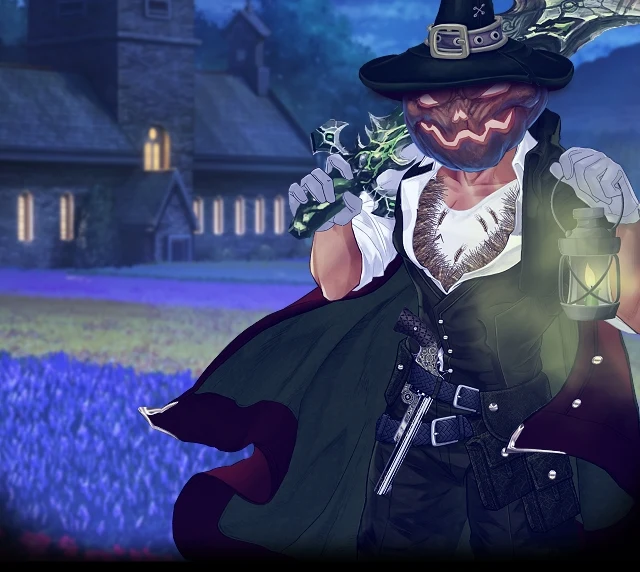
His appearance constantly shifts between that of an executioner, a judge, and a charred corpse. His clothing resembles both the robes of an inquisitor and the work uniform of an executioner. Traces of fire, dirt, and old blood are visible on the fabric.
His face may be concealed by a hood, a mask, or a dense shadow. Those who have managed to see it fully have described an expression not of rage, but of calm, professional interest.
Henri rarely shouts.
He has no need to portray himself as a monster.
He approaches his victim as a man confident that everything that is happening has already been sanctioned by law.
Instruments of torture may emerge directly from his body or appear nearby after the sentence is pronounced. Chains, belts, hooks, and iron clamps are no longer ordinary objects to him.
They have become part of his power.
The Hour of the Wolf
The Inquisitor is at his most powerful during the Hour of the Wolf—the moment when the boundaries between worlds grow thin and the spells holding spirits in check temporarily lose their power.
Agnet warned Chelsea that this was precisely when the Inquisitor went out hunting. She herself could not fully understand who he was and expended enormous effort only to banish him temporarily.
The Hour of the Wolf gives Henri the ability to:
enter places protected by a witch’s spells;
see the living among the spirits;
track a person by their fear;
attack Agnet’s tamed entities;
break temporary seals;
return after a normal banishment.
Other ghosts sense his approach in advance.
Even the estate’s vicious spirits prefer to hide, because Henri is capable of doing to them what he did to people in life: bind them, strip them of their free will, and turn them into tools for his own hunt.
To the living, he was a witch hunter.
After death, he became an executioner of ghosts.
Sentence
Henri’s primary infernal ability is Verdict.
The Inquisitor brings a charge and demands a confession. The truth of the charge is irrelevant.
If the victim verbally agrees to the imposed guilt—even while trying to end the torment—those words become a seal.
After that, Henri is able to:
track the victim across worlds;
temporarily deprive them of the ability to use magic;
imprison their soul in the interrogation chamber;
transform fear and shame into physical chains;
return to them after banishment.
That is why he constantly provokes confessions.
His goal is not to discover the truth, but to force a person to utter a formula of their own submission.
In his view, there are no innocent people.
There are only those who have not yet confessed.
The Fear of Spirits
Ordinary spirits feared the Inquisitor more than they feared many demons.
A demon may desire a soul, a body, or pleasure.
Henri wanted the right to dispose of the victim’s very essence.
He could force a spirit to relive the circumstances of its death, trap it in an endless interrogation, or bind it to an instrument of torture. Some ghosts, after encountering him, forgot their own names and became silent servants.
His presence distorted even the most aggressive spirits.
They grew quieter.
They stopped hunting.
They hid in objects and locked rooms.
That is why Agnet did not consider the Inquisitor part of her collection. He could not be tamed by conventional means, seduced, or appeased.
Henri did not want to become one of the estate’s spirits.
He wanted to turn the estate into a new torture chamber.
Agnet’s Estate
It was no coincidence that the Inquisitor was connected to the estate.
Agnet belonged to the House of Maria.
Chelsea was a distant heiress of that same line.
For Henri, this meant that his unfinished hunt continued across the centuries.
The estate attracted spirits, housed witchcraft artifacts, and stood on the border between worlds. For the Inquisitor, it became the ideal place to once again pursue the women of the lineage that had once eluded his power.
Agnet had managed to banish him, but not destroy him. In her warning, she had called him the only creature in the house that Chelsea truly had reason to fear. During the hour of the wolf, the Inquisitor would break free from the restraining spells and begin his hunt.
Chelsea could banish the other spirits or make a deal with them.
With Henri, a deal meant nothing more than a reprieve.
Part Three
By the events of Part Three, Henri has already far surpassed his own human form.
He is no longer merely the spirit of a fallen executioner. Over the years of hunting, torture, and returns, he has accumulated enough fear and foreign energy to become one of the most dangerous infernal entities associated with the estate.
His sadism has intensified.
Human limitations have vanished.
Lust has finally merged with the desire to destroy the self.
Now it was not enough for him to take a woman’s body. He wanted her to acknowledge his power herself, renounce her name, and become part of an eternal sentence.
Even other spirits perceived him not as a fellow spirit, but as a predator.
A standard exorcism could only temporarily banish Henri. Destroying the manifested body changed nothing: the sentence, the pact, and his connection to the spirit world allowed him to return.
What was needed was a being capable of killing him in both forms at once.
Jack
Jack is Henri’s main adversary.
Their story began in 1585, when the executioner killed a man who had held off their pursuers to save Chelsea and Maria.
Then, upon his return, Jack destroyed Henri’s human body and rescued Maria from the burning city.
But the real battle continued for centuries.
Henri grew stronger after death. He was certain that he was now beyond reach: the living could not permanently affect his soul, and spirits lacked the power to sever their connection to the material world.
Jack existed on both sides of that boundary.
He was a dead man in a living body, a spirit with a physical anchor, and a being capable of pursuing his enemy through different layers of reality.
That is why the manor states plainly:
“Only the Candle Demon can stop the Inquisitor. He who stands on both sides of the worlds at once—only he can fire the final shot.”
To summon the decisive encounter, Jack’s head must be placed on the altar.
Henri has already killed Jack once.
But that is precisely what turned Jack into a being capable of killing Henri once and for all.
Why Henri Loses to Jack
Henri’s power is based on several factors:
fear of death;
guilt;
shame;
acknowledgment of the executioner’s authority;
the prisoner’s helplessness.
These have almost no effect on Jack.
Jack is already dead.
He does not consider his monstrous body a sin.
He does not recognize Henri’s ecclesiastical authority.
He no longer feels the same human fear toward him.
And he doesn’t ask for permission to protect those he considers family.
Henri can withstand a monstrous amount of damage and survive blows from ordinary weapons. But Jack strikes simultaneously at the body, the spirit, and the pact they made.
That is precisely why their final battle is so grueling.
Jack isn’t just fighting a ghost.
He is destroying the entire system that has allowed Henri to return for centuries.
Chelsea
For the infernal Henri, Chelsea remains his primary unfinished prey.
She escaped him in 1585.
Her ancestor survived captivity.
Her lineage continued.
And now, centuries later, Chelsea herself reappears in a place where he can hunt her.
He takes this as a personal insult.
Chelsea undermines the fundamental principle of his worldview: a person whom Henri has declared guilty is not obligated to obey the verdict.
She can hide.
Return.
Change the rules.
Call on Jack.
And destroy the judge once and for all.
That’s why Henri doesn’t just want to catch her.
He wants to prove that her previous escape changed nothing.
Maria
Maria became the first proof of Henri’s own defeat.
He got her after Chelsea disappeared, but couldn’t hold on to her. Jack came for her, destroyed the guards, and carried Maria out of the city engulfed in flames.
She survived.
She started a family.
She passed on her witch's gift to the next generation.
She told the story of Henri to her children, grandchildren, and great-grandchildren.
For the executioner, this turned out to be worse than a normal death.
The victim not only outlived him.
She deprived him of the right to determine for himself how the story ended.
It was Maria’s descendants, centuries later, who completed what had begun in the burning city.
Human Abilities
Even before his transformation, Henri possessed dangerous advantages.
Knowledge of the Body
As a professional executioner, he understood the limits of human endurance and knew how to inflict maximum pain without letting the prisoner die too soon.
The Power of the Law
Henri could detain, interrogate, and execute people under the guise of an official investigation.
A Network of Informants
Guards, fortune-tellers, merchants, and frightened townspeople provided him with information.
Psychological Pressure
He knew how to use shame, rumors, and the fear of public condemnation even before resorting to physical torture.
The Power of a Deal
In the final years of his life, Henri suffered severe injuries, recovered quickly, and grew stronger from the fear of those around him.
Infernal Abilities
After his death, his abilities expanded significantly.
Manifestation at the Hour of the Wolf
Henri is able to enter the physical world when the boundaries of reality become thin.
Hunting on Fear
He senses people who fear him or anticipate punishment.
Suppression of Spirits
The Inquisitor weakens nearby creatures and can temporarily dispel the spells that keep them at bay.
Sentence
A confession, whether given willingly or under duress, allows Henri to bind the victim’s soul.
Return After Banishment
Ordinary rituals destroy only the current manifestation.
Infernal Instruments
He creates chains, shackles, and instruments of torture from his own energy.
Traveling Between Realms
Henri is capable of pursuing a target through spiritual realms, dreams, and cursed places.
Feeding on Shame and Pain
The more a victim is humiliated and broken, the more stable his form becomes.
Limitations
Despite his power, Henri is not omnipotent.
He Needs a Verdict
Without an accusation and an internal reaction from the victim, his power is weaker. People who do not recognize his right to judge resist for much longer.
He Depends on Fear
A person who no longer fears punishment or death robs Henri of some of his power.
His Deal Connects Two Worlds
This allows him to return, but at the same time makes him vulnerable to creatures like Jack.
He Is Incapable of Understanding Voluntary Sacrifice
Henri perceives every action through the lens of power and submission. Therefore, the decisions made by Jack, Chelsea, and Maria—based on concern for another person—constantly throw a wrench in his plans.
He Cannot Definitively Defeat Maria’s Lineage
Every woman who survives his hunt passes the memory on. As long as Henri’s story is known, he cannot replace it with his own version of events.
Connections and Meaning
Henri embodies cruelty that has been officially sanctioned.
The Jester turns life into a performance.
The Puppet Master turns people into property.
The Nightmare Merchant turns weakness into a bargain.
Henri turns violence into law.
That is precisely why he is more terrifying than many demons.
A demon can follow its nature.
Henri was human and made a conscious choice every single time.
He could have stopped.
He could have let the prisoner go.
He could have refused the deal.
He could have chosen not to turn other people’s pain into a profession.
But he chose to continue, because society called his crimes a service.
After his death, he did not become a different being.
The Infernal Inquisitor is Henri, freed from his final human limitations.