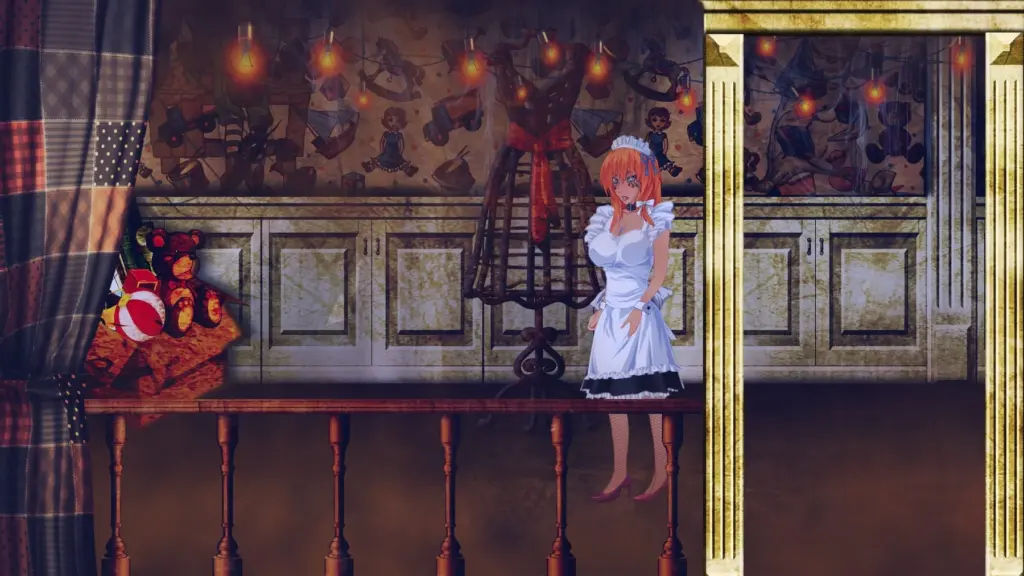
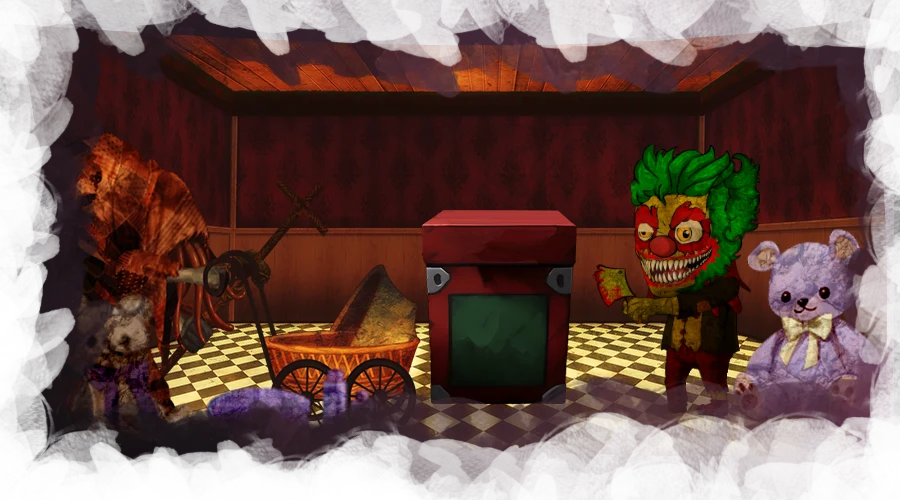
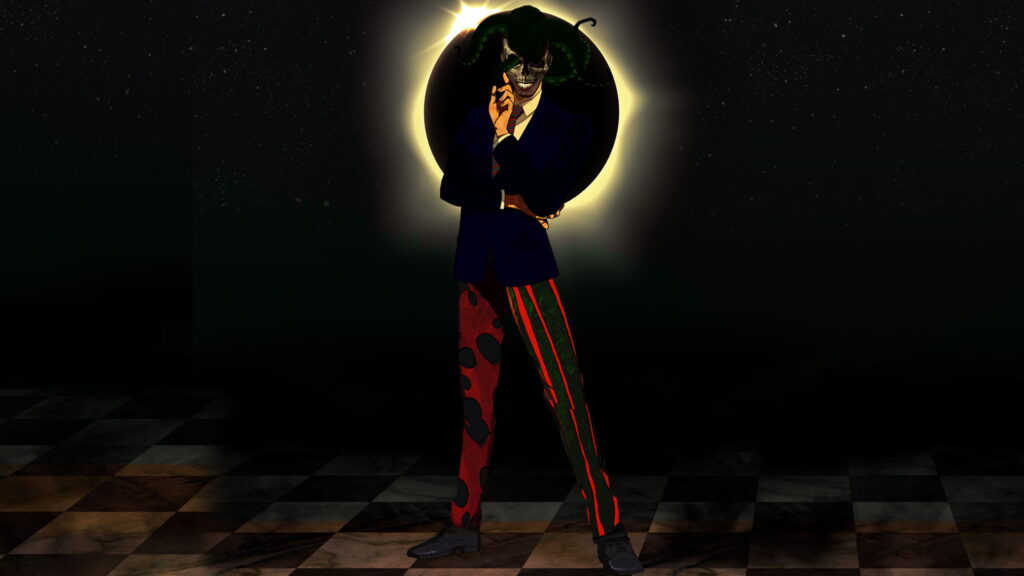
| HUMAN NAME | Gretta |
|---|---|
| NATURE | A reborn entity of the Moonlit World |
| DOMAIN | The Dollhouse |
| MAIN POWER | Reading dreams; transforming body and mind to fit a puppet’s role |
The Puppet Master promises to free a person from the pain of choice. The price of this tender, almost maternal care is the right to cease belonging to oneself forever.
Human Name: Gretta
Other Names: The Puppet Master, Mother of Puppets, Mistress of the Dollhouse
Original Nature: Human
Current Nature: A reborn entity of the Moonlit World
Primary Domain: The Dollhouse
First Known Doll: Janet
Known Allies: The Nightmare Merchant, the Jester, and the Keykeeper
Main Source of Power: Soul-Time
Primary Ability: Transforms human desires into new bodies, roles, and forms of existence
Danger Level: Extremely High
Key Trait: Does not regard the transformation of a human being as violence; to her, it is the correction of an imperfect form
General Description
The Puppet Master is one of the most dangerous entities associated with Chelsea and the Moonlit World.
She was once an ordinary woman named Gretta. She worked as an accountant, lived in her own house, was married to Nick, and employed a maid named Janet. Her life contained neither ancient magic nor a witch’s legacy, nor any overt desire to become a monster.
Everything changed after the Dollhouse appeared.
A small toy appeared in the foyer out of nowhere. At first, Gretta mistook it for a strange gift or a prank by her husband. But soon the house took hold of her thoughts and revealed a new purpose to her: to uncover others’ secret desires, give them tangible form, and permanently settle people within the world created just for them.
The first doll was Janet.
Later, Gretta was committed to a psychiatric hospital, where she met Benjamin, Mark, and the Nightmare Merchant. With his help, she gained Soul-Time, passed through the fire into the Moonlit World, and ceased to be human once and for all.
Now the Puppet Master collects more than just bodies.
She collects people reduced to a single desire.
Each of her dolls is given a beautiful form, a suitable room, and a role from which there is no escape.
Gretta Before the Transformation
Before the Dollhouse appeared, Gretta’s life was calm and well-ordered.
She worked as an accountant at a small firm. The job didn’t require excessive effort and brought in enough money to maintain the house and hire servants. Gretta was married to Nick, socialized with friends, and led a seemingly ordinary life.
She later described her existence as a vicious cycle:
Home. Work. Getting together with friends.
There is no direct indication of deep unhappiness in this account. Gretta wasn’t starving, wasn’t being persecuted, and wasn’t rejected by society. But her life consisted of an endless repetition of actions that gave her no sense of a real purpose.
Her job as an accountant had accustomed her to a world where everything had to be accounted for and in its proper place.
Numbers never betrayed her.
Documents didn’t change her desires.
An entry in a ledger couldn’t suddenly decide that it no longer belonged to its owner.
People were much more complicated.
They hid their feelings, changed their minds, broke promises, and made plans behind each other’s backs. Gretta didn’t fully understand this yet, but she already possessed a disposition that found it easier to accept a well-ordered system than the freedom of a living person.
The Dollhouse didn’t create that trait.
It discovered it.
The Appearance of the Dollhouse
One morning, Gretta discovered a small dollhouse on the dresser in the hall.
No one knew how it had gotten there.
The maid, Janet, couldn’t explain it. Nick was away on a business trip at the time, and Gretta decided that her husband might have talked someone into playing this unusual prank. She had wanted to buy a new house for a long time, so the toy could have been a hint—or a mockery—of her desire.
That evening, Gretta came home from work and barely noticed the discovery.
But the influence had already begun.
Later, she claimed that she had ceased to be herself that evening. Something had taken control of her mind, altered her perception of the world, and freed her from her former existence.
She now had a purpose:
Serve the Dollhouse and protect it.
The House did not speak to her in a normal voice. It acted through sudden thoughts, images, desires, and objects that had previously seemed insignificant.
Gretta began to notice hiding places.
She began to hear what people kept silent about.
She began to see the connection between personal belongings and their owners’ hidden desires.
The Dollhouse taught her to gather fragments of dreams—emotional traces from which one can reconstruct a person’s true desires and prepare a new form for them.
Fragments of Dreams
A fragment of a dream isn’t necessarily a magical object.
An ordinary object can become one if a strong emotion is attached to it:
a letter;
a photograph;
hidden money;
a piece of clothing;
a key;
a diary;
a gift;
something embarrassing;
evidence of infidelity;
an object used in a secret fantasy.
Each such object contains a part of a person that they do not reveal to those around them.
Taken separately, these parts prove nothing. But when the Puppet Master brings them together, a hidden story emerges before her.
The problem is that Gretta does not seek to understand a person as a whole.
She chooses one dream, one weakness, or one desire and declares that to be the owner’s true essence.
After that, everything else can be discarded.
Doubts become lies.
Resistance becomes fear of oneself.
Any attempt to run away is proof that the future doll isn’t yet ready to accept her own happiness.
This is how Gretta’s main justification works:
She doesn’t change people against their will. She supposedly shows them what they’ve always wanted.
In reality, the right to interpret always remains hers.
Janet
Janet was Gretta’s maid and the first known doll.
At first, her mistress considered her a not particularly smart but harmless servant. After the Dollhouse awoke, Gretta began searching for the five fragments of her dream.
Her discoveries revealed a completely different side of Janet’s life.
The maid was having a secret affair with Nick—Gretta’s husband. They planned to meet after midnight at the back gate, take the documents, and run away so far that no one could find them.
But it wasn’t just about running away.
Gretta discovered poison hidden behind a plant.
Among Janet’s belongings was a will transferring Gretta’s estate to Nick.
The necessary items had been packed in the suitcase, and midnight was marked on the watch face with lipstick.
Janet’s diary contained candid entries and numerous malicious remarks about the lady of the house. Everything pointed to a premeditated plan: Janet and Nick didn’t just want to start a new life—they wanted to get rid of Gretta and take advantage of her estate.
For Gretta, this was the first real revelation about the Dollhouse.
The person who was by her side every day, cleaning her rooms and pretending to be a submissive maid, was simultaneously sleeping with her husband and plotting her betrayal.
From that moment on, Gretta stopped trusting human appearances.
She began to see outward appearances as mere masks.
She began to consider only what she managed to uncover among people’s secret desires to be their true selves.
The Teddy Bear
Among Janet’s belongings was an old teddy bear.
At first glance, it was the most innocent of the items she’d found. Gretta didn’t even know if it belonged to Janet herself or had been stolen from the attic.
But the bear turned out to be connected to the maid’s secret adult fantasy.
The Dollhouse brought the toy to life and allowed Janet to experience a desire she had hidden from everyone around her. The encounter with the teddy bear was not accidental, but part of her transformation.
Gretta gave Janet what she secretly wanted.
But along with fulfilling her dream, the house gained access to her soul.
After playing an adult game with the toy that had come to life, Janet found herself irrevocably bound to the Dollhouse. Gretta completed the transformation and sent her inside.
All that remained of the woman on the outside was her dress.
Inside, a beautiful doll appeared.
Janet’s Fairy Tale
Janet’s story was rewritten by the Dollhouse as a fairy tale.
In this fairy tale, the evil witch died, the beautiful maid married the prince, and her beloved teddy bear remained by their side. They lived happily ever after.
Janet got almost everything she had ever dreamed of:
a new life;
freedom from her mistress;
love;
a beautiful role;
the fulfillment of a secret fantasy;
her own fairy-tale world.
But one change completely distorted the meaning of the dream.
Freedom was gone.
Janet didn’t leave with Nick.
She did not become the mistress of the inherited estate.
She was unable to choose her own future.
Her desire was transformed into a room, a body, and an eternal role.
The Dollhouse fulfilled her dream literally, but robbed Janet of the chance to ever desire anything else.
That is how the first doll came to be.
Revenge, a Gift, and a Demonstration of Power
There is no single reason to explain Janet’s transformation.
Several motives were intertwined in Gretta’s actions.
Revenge
Janet had betrayed her, started a relationship with Nick, and likely participated in a plot to get rid of her mistress. By turning the maid into a doll, Gretta deprived her of everything for which she had been planning her escape.
Janet did not get Nick.
She didn’t get the property.
She did not gain her freedom.
A Wish Fulfilled
Under the influence of the house, Gretta truly believed she had given Janet the life she desired. A secret fantasy had been fulfilled, a fairy tale created, and the new reality seemed perfect.
The First Proof of Power
Before Janet, Gretta had only heard the will of the house.
After the transformation, she saw for the first time that she was capable of completely rewriting someone else’s destiny.
It was then that the Puppet Master’s future philosophy took shape:
If a person hides a desire, it means they are afraid to admit it to themselves.
If Gretta is capable of bringing it to life, then she has the right to choose its final form.
Janet became more than just the first doll.
She became proof that Gretta was no longer obliged to tolerate human unpredictability.
Janet’s Disappearance
The maid’s disappearance was noticed quickly.
Her dress was found in Gretta’s house. The hostess herself made no secret of what had happened and tried to explain that Janet had gone to the Dollhouse and was now happy.
To the police and doctors, this sounded like the confession of a mentally ill person involved in the woman’s disappearance.
Gretta was admitted to a psychiatric hospital.
She did not consider herself a criminal.
In her mind, Janet was alive, happy, and exactly where she wanted to be.
The fact that no one else could see or hear the maid didn’t matter.
The Puppet Master was already beginning to perceive the material world as a limited surface beyond which more fitting realities existed.
Nick
Nick was Gretta’s husband, Janet’s lover, and a participant in the escape plan.
He was away on a business trip when the doll appeared in the house. After the maid’s disappearance and Gretta’s confinement to the hospital, Nick remained at large.
It is unknown exactly what he told the investigators.
Perhaps he denied having an affair with Janet.
Perhaps he portrayed his wife as a dangerous, insane woman.
Perhaps he truly did not understand what had happened to the maid.
But his own story soon intersected with another strand of the curse.
Nick was a friend of Benjamin’s—a restorer who had received a box and the Jester’s mask from the Nightmare Merchant.
When Benjamin couldn’t open the box, Nick promised to come and help. By that point, the mask had already fused with Benjamin’s face, and his mind was beginning to unravel.
A brief, terrifying thought appears in the future Jester’s diary:
Do I need his help… a saw?
Later, Benjamin explicitly mentions Nick being sawed in half and writes that his fear had permeated the box enough to make it open.
Thus, Gretta’s husband became the man whose death marked the birth of the modern Jester.
The Connection Between Gretta and Benjamin
Gretta and Benjamin’s stories were intertwined even before they met in person.
Gretta turned Nick’s mistress into the first doll.
Benjamin killed Nick himself and used his fear to awaken the box.
After that, they both ended up in the same psychiatric hospital.
Gretta—because of Janet’s disappearance and her attempts to turn other women into dolls.
Benjamin—after murdering Nick and having his personality consumed by the Jester mask.
It remains unknown whether Gretta knew that Benjamin had killed her husband.
It’s also unknown whether Benjamin realized that Nick was the husband of the woman who wandered around the hospital wrapped in blankets and called herself the Mother of the Dolls.
Perhaps they never learned the truth.
Perhaps Gretta found out, but by that time, Nick was no longer of any value to her.
Her husband had betrayed her by choosing Janet.
After the Dollhouse awoke, Gretta no longer trusted people who were capable of leaving of their own free will.
Perfect love, in her opinion, is possible only where no one is capable of leaving the mistress.
Hospital Report
Medical records described Gretta as a patient with a severe mental disorder and extremely dangerous behavior.
During periods of calm, she would pretend to be the mother of the dolls, wrap herself in blankets, and walk around the ward. Staff were forbidden from entering her room without being accompanied by orderlies armed with tranquilizers.
These measures were implemented following the death of a nurse whom Gretta had tried to turn into one of her dolls.
Even without the Dollhouse’s immediate presence, she continued to follow its will.
The hospital seemed to her like a temporary dwelling.
Patients and staff—raw material.
The wards were empty rooms that still needed to be properly furnished.
It was there that she met those with whom she would later journey to the Moonlit World:
Benjamin, who no longer considered himself human and demanded to be called the Jester.
Mark, covered in images of keyholes and calling himself the Keykeeper.
The Nightmare Merchant, a tiny creature whom the doctors considered a harmless, ugly patient.
To the doctors, these were four cases of severe insanity.
In reality, the future masters of doors, fantasies, and living toys had gathered in a single building.
The Nightmare Merchant
The Nightmare Merchant was the first to treat Gretta’s desires as a real power rather than an illness.
He taught her to penetrate through material reality into the Moonlit World.
But Gretta’s soul and body were still bound to Earth. To make the complete transition, she needed “Soul-Time”—a special energy derived from human experiences that allows beings from other worlds to take on a physical form and dwell among humans.
The Merchant proposed a deal.
Gretta was to help free the Jester and the Keykeeper.
In return, after the transition, the Dollhouse would become her property.
Perhaps it was no coincidence that the Merchant happened to be nearby.
The Dollhouse appeared in Gretta’s possession.
The box appeared in Benjamin’s possession.
Nick connected the two stories.
Then both future masters of infernal domains found themselves in the same place as the Nightmare Merchant.
There is no direct evidence that he orchestrated the entire chain of events. But too many things happened exactly as it suited the little merchant.
Ginger
To complete the transition, Gretta needed Soul-Time.
Her new target was the nurse Ginger.
Gretta considered her a mean, rude, and stupid woman, but it was precisely her strong hidden desires that made the nurse a suitable source of energy.
Just as she had done with Janet, Gretta began collecting five fragments of a dream.
Among Ginger’s belongings were:
money, the source of which she concealed;
pills;
lock picks;
an invitation to an adults-only party;
an expensive ring;
sex toys;
rare antiques;
traces of a secret life completely at odds with the image of a healthcare worker.
Each discovery shattered Ginger’s public persona and revealed a woman who hid her desires, crimes, and dreams behind her hospital uniform.
Gretta pieced together her true story.
And then she sent the nurse to the Dollhouse.
This gave her the Soul-Time she needed.
The Fire
Immediately after Ginger's transformation, a fire broke out at the hospital.
It is unknown who exactly started it or whether it was part of a premeditated plan. However, the fire became the moment of liberation for the entire group.
The Nightmare Merchant handed Mark a special key.
The Keykeeper opened a door that hadn’t existed before.
Beyond it lay the Moonlit World.
The Jester, the Keykeeper, and the Merchant passed through the fire.
Gretta followed them.
From an earthly perspective, their bodies should have perished in the hospital.
But the transition took place before death became final.
The fire destroyed their former forms.
The Moonlit World gave them new forms.
Rebirth
Beyond the door lay a world completely unlike Earth.
Gretta remembered its greenish glow as something pure and beautiful. Everyone who had passed through the fire suffered severe burns, but in the Moonlit World, the injuries were restructured in accordance with their inner nature.
The Nightmare Merchant explained:
Transformation comes from the soul.
Mark became the Keykeeper.
Benjamin was finally transformed into the Jester.
Gretta became the Puppet Master.
She lost her human beauty, but did not see this as a punishment. On the contrary, her new form gave her the ability to take beauty from others and use it as she pleased:
“Even if nothing remains of my former beauty, I can take as much as I want, whenever and from whomever I choose.”
After her transformation, she was offered an important position—the Dollhouse, which serves as one of the portals between worlds.
Gretta was no longer a toy.
She became its mistress.
First Form
The Puppet Master’s original form was relatively slender and tall.
A human body was concealed beneath a long, dark robe. The face was not visible: deep darkness remained inside the hood, from which fleshy appendages hung.
They resembled, all at once:
a puppeteer’s fingers;
tentacles;
torn threads;
the soft parts of an unfinished toy.
An old baby carriage stood nearby.
In this form, Gretta still resembled a woman shrouded in a mourning veil. Her posture was upright, her movements more fluid, and her very essence seemed more like that of a strange caretaker than the ancient mistress of a vast estate.
This was her first appearance after her rebirth.
It still retained the memory of the woman who considered herself a mother to dolls.
The Final Form
Over time, the Puppet Master changed.
Her final, primary form became significantly heavier, more massive, and hunched.
Her body had almost completely disappeared beneath layers of patchwork clothing. The shroud appears to be pieced together from charred fabric, old bedspreads, scraps of clothing, and materials that belonged to the house’s former inhabitants.
Gretta moves with the support of an old carriage and a long staff crowned by a cross-shaped head.
Her head is still hidden by a hood. Protrusions emerge from the darkness, but now they no longer appear to be the remains of a human body.
These are fully formed organs of a creature.
A hunched posture does not signify old age or weakness.
The Puppet Master bears the accumulated weight:
the desires of others;
the soul’s accumulated time;
transformed bodies;
the rooms of the Dollhouse;
unfinished dolls;
the memories of those she had appropriated.
The larger her collection grew, the less of Gretta remained in her appearance.
The Staff
The Puppet Master’s staff has a cross-shaped pommel, but it is not associated with the Christian faith.
For Gretta, the cross is, above all, an intersection of lines.
A place where one boundary crosses another.
It simultaneously resembles:
a puppeteer’s handle;
a spindle;
a key;
a marionette’s axle;
a grave marker;
a mechanism that locks in the new form.
The staff is used to solidify transformations, control the boundaries of the Dollhouse, and seal off passages.
With it, Gretta can draw a line between her former self and her new puppet.
Once the ritual is complete, it is nearly impossible to cross back over that line.
The Carriage
The carriage accompanies the Puppet Master in all her known forms.
It is not an ordinary means of transportation, nor is it merely a theatrical symbol.
Its interior is significantly larger than its exterior.
The carriage may contain:
captured souls;
parts of new bodies;
fragments of a dream;
unfinished dolls;
entrances to separate rooms in the house;
memories of the toys’ former owners.
Sometimes, movement can be heard from inside.
Sometimes—quiet laughter.
Sometimes Gretta speaks to whoever is inside the carriage as a mother would speak to a child.
But her motherhood is based on complete possession.
A child grows up and eventually leaves.
The doll stays with its owner forever.
The Dollhouse
The Dollhouse exists simultaneously as an object, a portal, and a world of its own.
It cannot be measured by its external dimensions.
Inside are hallways, bedrooms, playrooms, living rooms, closets, staircases, and doors that could never fit into an ordinary toy.
The Dollhouse reshapes its architecture around whoever enters it.
For one captive, it becomes a cozy home.
For another, it’s a labyrinth.
For a third, it’s a workshop where her body is gradually transformed.
Each new doll gets her own space.
The room is created from the desires, fears, and memories of its future inhabitant. That is why the Dollhouse can seem more appealing than the real world.
It offers exactly what a person has been lacking:
safety;
love;
attention;
a beautiful body;
the absence of aging;
freedom from responsibility;
the right to never have to make a decision again.
There is only one price:
the new inhabitant ceases to belong to herself.
The Nature of the House
It is unknown who created the Dollhouse.
Gretta was not its first creator. It appeared in her home already in existence and immediately began to alter its mistress’s consciousness.
Perhaps the house is an independent entity.
Perhaps it is an ancient portal that needed a new caretaker.
Perhaps the Nightmare Merchant planted it there, having foreseen Gretta as its future mistress.
After her rebirth, the distinction between Gretta and the house gradually fades.
She controls its rooms.
The house nourishes her with its power.
She creates dolls.
The dolls expand the house.
If one manifestation of Gretta is destroyed, the domain can preserve her consciousness.
If part of the house is destroyed, the Puppet Master feels the damage as if it were her own wound.
The Puppet Master is no longer merely a woman living within the portal.
She is its mind and will.
Transformation Into a Doll
Gretta rarely transforms a person instantly.
A complete transformation requires time, access to the captive’s desires, and the gradual weakening of her former personality.
Stage One: Observation
The Puppet Master selects a future puppet and begins to follow her.
She may remain invisible, appear in doorways, or watch from the next room.
Stage Two: Fragments of a Dream
Gretta finds objects connected to the person’s secret desires.
These help determine which form the captive will most easily take.
Stage Three: The Proposal
The future doll is shown a world in which her wish has come true.
Sometimes she enters of her own free will.
Sometimes she is lured in.
Sometimes Gretta simply feigns resistance by acting momentarily confused.
Stage Four: Altered Consciousness
The commands begin to seem soothing.
Making her own choices feels exhausting.
The thought of submission brings relief.
The captive increasingly thinks that perhaps she always wanted to stay.
Stage Five: Physical Transformation
Her skin becomes too smooth.
Her joints take on an unnatural flexibility.
Clothing merges with the body.
Her voice grows quieter or takes on a mechanical tone.
Movements begin to depend on strings, a key, someone else’s touch, or the owner’s will.
The Final Stage: the Role
The name loses its meaning.
The person becomes a servant, a toy, a mannequin, a doll, a bride, a pet, or part of the scenery.
After that, the role is perceived as a natural state.
The doll no longer remembers why she wanted to leave.
Gretta’s Philosophy
The Puppet Master does not consider freedom an absolute good.
For her, freedom is the source of most human suffering.
People are given the opportunity to choose—and they betray one another.
They can leave—and abandon those who love them.
They can change their minds—and break their promises.
They can hide their desires—and lie to themselves for years.
Gretta saw this in the examples of Nick and Janet.
After their betrayal, she came to the conclusion that love based on freedom is unreliable.
A doll is better that way.
It doesn’t leave.
It doesn’t betray its owner.
It doesn’t age.
It doesn’t lie about its desires.
It doesn’t demand an explanation for every decision.
That’s why Gretta considers her own home not a prison, but an improved version of human life.
Distorted Motherhood
In the hospital, Gretta called herself a mother of dolls.
After her rebirth, this image became the foundation of her identity.
She is truly capable of caring for her toys:
repair damaged bodies;
create new outfits;
decorate rooms;
comfort them;
protect them from other creatures;
give form to souls that have lost their bodies.
But this care precludes independence.
Gretta does not accept growing up.
She does not accept being cared for.
She won’t let the doll give up the form she was given.
Her love sounds something like this:
I know what you need.
You’re just too afraid to admit it yet.
When the transformation is complete, you’ll stop resisting and realize that I was right.
That’s exactly why arguing with the Puppet Master is almost pointless.
She perceives any protest not as human free will, but as a malfunction that needs to be fixed.
Chelsea
Chelsea becomes one of Gretta’s most coveted dolls.
She is beautiful, strong, capable of change, and filled with conflicting desires. At the same time, Chelsea is already connected to the Moonlit World and can navigate spaces where an ordinary person would quickly lose their way.
For the Puppet Master, she is nearly perfect material.
But Chelsea possesses a quality that Gretta constantly underestimates.
She is capable of accepting a part of someone else’s game, experiencing pleasure, and still not giving up her desire to leave.
The Puppet Master believes that pleasure proves consent.
Chelsea understands that one does not necessarily imply the other.
That is precisely what allows her to resist the transformation.
The Pursuit of Chelsea
On the way back to the estate, the Puppet Master begins to follow Chelsea unseen.
She warns:
“From now on, I will follow you unseen, slowly turning you into my doll. When the time is up—you will be mine.”
The transformation isn’t a single scene, but a constant pursuit.
Chelsea must find a way to get rid of Gretta before the countdown ends. To do this, she must lure the Puppet Master to a place where she can control entry and exit, keep her in sight, and lock her up with a special Tlazdine key.
This reveals an important limitation of Gretta.
She is capable of creating nearly infinite interior spaces, but she herself can be confined where the boundaries are defined by someone else.
The Puppet Master is particularly vulnerable when she herself becomes a prisoner inside a properly constructed room.
The Encounter at the Hotel
Later, the Puppet Master reappears during the events at the hotel.
She recognizes Chelsea and reminds her that she had already offered her a place to live in the Dollhouse.
This time, Gretta has no intention of waiting for a voluntary decision:
“I’m not asking you now. We’re going to my house.”
However, even after kidnapping her, she leaves Chelsea a way out.
If Chelsea can pass the test and escape, she will regain her freedom.
If she fails, she’ll become her mistress’s property.
When Chelsea fails, Gretta declares:
“You couldn’t escape, so you didn’t want to.”
This encapsulates the Puppet Master’s entire logic.
She sets a complex trap.
She doesn’t explain the rules fully.
She pursues her captive.
And then she counts defeat as a voluntary choice to stay.
The Nightmare Merchant
Gretta owes her final form to the Nightmare Merchant.
He didn’t create her desire, nor did he force her to transform Janet. But it was he who:
recognized her connection to home;
taught her to enter the Moonlit World;
told her about the time of the soul;
helped organize the escape;
offered his own estate;
turned her obsession into a real strength.
The Merchant did not save Gretta out of compassion.
He saw a suitable guardian for an important portal.
Gretta got everything she wanted.
The Merchant gained a new mistress for the Dollhouse and a source of souls for the network between worlds.
Both consider the deal a success.
The Jester
The Jester and the Puppet Master emerged from the same hospital and walked through the same door.
They are similar in many ways.
Both transform human desires into separate worlds.
Both use fear and excitement as a source of power.
Both offer their captives roles from which it is difficult to escape.
But their goals differ.
The Jester needs a living performance.
He loves unpredictability, resistance, and the moment when an actor changes the script.
Gretta strives for completeness.
She wants each character to take their rightful place and never leave it.
For the Jester, Chelsea is interesting as long as she’s capable of surprising him.
For Gretta, Chelsea will only be perfect when she stops changing without permission.
The Jester creates the scene.
Gretta locks the doll in the room after the performance ends.
The Keykeeper
The Keykeeper opened the door, allowing Gretta to leave the burning hospital.
His power is especially important to the Dollhouse. Gretta’s domain consists of many boundaries: rooms, closets, toy doors, and passages between dimensions.
But not all the keys belong to her.
That is precisely why it is sometimes possible to escape from the house.
The Puppet Master controls the architecture.
The Keykeeper controls the very principle of passage.
Their collaboration allows them to create doors that lead into a person’s inner self, their memories, or their dreams.
But if the Keykeeper decides that a passage must remain open, even Gretta isn’t always able to close it.
Soul-Time
The Puppet Master needs Soul-Time to remain on Earth and maintain a physical form.
She receives it by playing with the puppets and bringing their secret desires to life.
Moments of transition provide a particularly great deal of energy:
acknowledging a desire;
voluntary submission;
renouncing one’s former name;
taking on a new form;
pleasure mixed with fear;
the final decision to stay.
Soul-Time explains why Gretta does not destroy her captives immediately.
A living doll is more valuable to her than a dead body.
A living doll can repeat her assigned role indefinitely, sustaining both her mistress and the Dollhouse.
Abilities
Reading Desires
Gretta sees the emotional connections between a person and the objects they own.
Gathering Fragments of Dreams
She weaves individual secrets into a cohesive image that becomes the foundation for transformation.
Body Alteration
The Puppet Master can transform a person into a living doll, mannequin, toy, or creature with artificial joints.
Altering Consciousness
She weakens the desire for independence and makes submission seem natural and pleasant.
Binding the Soul
A soul can be bound to a toy, a piece of clothing, a room, a mechanism, or a part of the Dollhouse.
Space Manipulation
Gretta rearranges rooms, changes their dimensions, and connects interior spaces to other worlds.
Pursuit
Once a connection is established, she can follow the future doll, remaining invisible or appearing at the edge of the field of view.
Using the Carriage
The carriage serves as a repository for souls, a workshop, and a portable entrance to particular rooms of the Dollhouse.
Extracting Soul-Time
The Puppet Master feeds on the emotions that arise when assuming a new role.
Stealing Beauty
She is capable of transferring attractive features and qualities from one body to another, creating a new, ideal form.
Limitations
The Puppet Master is extremely powerful, but not omnipotent.
A complete transformation takes time.
Until the personality is completely rewritten, the captive is capable of resisting.
Gretta depends on Soul-Time and cannot remain on Earth indefinitely without new sources.
She can be confined to a space with controlled entry and exit points.
Special keys can limit her connection to the Dollhouse.
But Gretta’s main weakness lies in her worldview.
She doesn't understand that a person can desire something and still not want to turn that desire into eternal life.
Experiencing pleasure does not mean consenting to belong to the mistress.
A fantasy doesn’t have to become destiny.
A role taken on temporarily does not negate the right to step out of it.
Gretta is unable to recognize this distinction.
That is precisely why Chelsea disappoints her time and again.
What Remains of Gretta
The human woman Gretta once was has not disappeared entirely.
She manifests herself in the Puppet Master’s habits:
the desire to take everything into account;
the desire to create order;
attention to small details;
jealousy;
an inability to forgive betrayal;
the conviction that a well-structured system is more important than human feelings.
Even the Dollhouse resembles a giant ledger.
Every soul has its place.
Every dream has a form.
Every desire has a price.
Every doll has a room.
Nothing must disappear without being recorded.
Nick and Janet once tried to secretly remove themselves from Gretta’s life, disrupting the order of her world.
The Puppet Master has created a reality in which such a thing is no longer possible.
Now no one leaves her world without permission.
Connections and Meaning
The Puppet Master embodies the desire to care, which has turned into the right to possess.
Henri deprives a person of the right to be presumed innocent.
The Jester deprives people of the right to step out of their roles.
The Nightmare Merchant turns choice into an unequal bargain.
Gretta deprives a person of the right to change.
She is capable of bestowing beauty.
Eternal youth.
Security.
A new body.
The fulfillment of a secret fantasy.
A place where a person is always welcome.
But in exchange, it takes away your future.
A doll doesn’t age—because it no longer lives an ordinary life.
It isn’t left alone—because it can’t leave.
It never makes mistakes—because its owner makes the decisions.
It doesn’t suffer from betrayal—because it’s no longer capable of choosing anyone else.
For Gretta, it’s a perfect world.
For a human, it’s a beautifully furnished eternity with no right to open the door.